Thursday, 7 May 2015

Training Mask 2.0 Review |

training mask, elevation mask, elevation training, training mask 2.0

Elevation training has been a topic of considerable controversy lately. It seems that science is moving away from the concept as an effective means of developing aerobic capacity. In theory, elevation training would increase your red blood cell count, but you may have heard the counter arguments by now. It only works if you sleep in high altitude, it’s only effective if you are competing at altitude, and so on.

These sorts of arguments might dissuade you from purchasing a product called an “elevation mask.” While the Training Mask 2.0 is marketed as a simulation of elevation, and in some ways it is, what the mask actually does is force you to breath against resistance. So rather than somehow thinning the oxygen level of the air you’re breathing, it simply takes greater effort to breath. It’s as if you’re getting a lung workout in a way that you don’t usually get.

training mask, elevation mask, elevation training, training mask 2.0And I have to say, I enjoy it. It’s a funny feeling that may cause a little panic at first, but once you get past the sensation of needing to breath against resistance, it makes for a workout that will leave you gasping, but in a good way. Oh, and that’s just on the first level. There are multiple levels.

In addition to enjoying it, I like the principle behind it more than elevation training anyway. The diaphragm, which controls your breathing, is a muscle after all. Training the diaphragm is a long-standing tradition in some of the coolest of physical cultures and, really, I’ve never found a better way to accomplish it.

There are a few bonus side effects I’ve noticed as well. First, I live in the North, and running in the winter can be a pain, in part, because of breathing the cold weather. The Training Mask created a nice warm chamber, completely enclosing my nose and mouth. That had a mild warming effect that was great. I also noticed an mild boosting effect on my heart rate during extended warm up that may have given me enhanced cardiac benefit.

On the flip side of the coin, there were a few issues. I do wear glasses, and the mask didn’t work so well with them. Also, I have a giant head, and while I have the appropriate size according to the Training Mask sizing chart, I think it’s a tad too small for me. It is still comfortable, but I worry about the long-term structure where the Velcro attaches because of how much it stretches to put it on. So, when choosing a size, keep the circumference of your dome in mind.

If you exercise in public, you also need to be honest with yourself about whether you will actually wear this thing. Running down the street, it sort of looks like you have a black Hannibal Lecter mask on. That’s not for everyone.

Now, I don’t think there’s much in the way of research one way or the other on breathing against resistance as a regular part of your training, but to me it makes good sense. However, I haven’t progressed far enough up the levels of resistance to be able to say it’s made a huge impact on my training. As I continue to use it, I will post my results here on this page.

I have to say that despite what might seem like a laundry list of gripes, this is one of the coolest products I’ve tried. I love the feeling of breathing against resistance, and even more I love the idea that it’s like a barbell for my lung muscles. It has become a regular part of my routine, and if that part of physical culture entices you, then I’d recommend it for you as well.

The Training Mask 2.0 is available for $79.99 at TrainingMask.com

Review Courtesy of Doug Dupont @Break Muscle.Com| 


Wednesday, 6 May 2015

Unconventional Way to Fitness Training - Get the Best Clubbells

When one enters the gym, they see a number of fitness training equipment which is widely known to the world. Such fitness gear can be counted under traditional training and workout equipment, for instance a run of mill, treadmill, a stationary bicycle, weights, bench press, and arc trainer. However, an experienced strength trainer will be able to think outside the box and bring forth new innovative ideas with a new kit like one has never seen before. Some unconventional workout fitness training equipment UK is explained in detail below with their individual advantages.


Clubbells are designed similar to a baseball bats which are used in strength training and building requisite muscle mass in the body after subsequent training. What many are likely to miss out on is the fact that these can also be used in weight loss. Every day there are a number of new nifty methods being launched that make high claims of cutting down fat percentage in the body, thus helping your lose weight. However, when you are looking for the best ways to exercise in the ease and comfort of a house or your back yard and garden, a clubbell will make your dream more attainable.

This tool is simple to use and doesn't demand any technical know how. Because of its simplicity in design, these conventional yet innovative tools have survived centuries of development in the field of fitness training equipment. Its use and application hasn't altered or changed much over the years, moreover, experienced trainers have identified them among sought after tool for not only losing excess fat but building muscle mass and inner strength in the individual.
Here are some unique benefits of Clubbells training in comparison to other gears that are widely popular in the market today.

The best and most unique function served by this gear is of its versatility. While you train with different weights, there are only a defined number of ways that you can lift them. Thus, this leaves lesser room to improve ones flexibility as the movements are constricted and redefined. However with Clubbells one needn't be worried about this aspect, as it allows versatility and effectiveness in the quality of your workouts.


Another benefit of training with this brilliant workout tool is losing weight and that too in a short time period. Many ignore the use because it may not have the capacity to exhaust a trainee that easily. However, what people fail to realize is that based on its strength building features, a person ends up reducing weight much faster without feeling too exhausted or wearied.

Fitness gear like speed sled is counted among many other underestimated and underutilized equipment in the gym as well.

Source Andrew Louis| Go 

Tuesday, 5 May 2015

The Benefits Of Accupuncture Can Often Exceed Western Medicine

The first thing many people think of when it comes to acupuncture is pain relief. In reality, the benefits of accupuncture are far more than numerous than this. Acupuncture, along with other therapies, such as herbal medicine, has been healing the Chinese for thousands of years. Our Teeam use it frequently for remedial work on various muscles much like trigger point therapy to get us back in the BOX WODing on the bike or out on our next adventure..

Acupuncture works by helping your body to restore itself to balance. Whenever your body is not functioning properly, whether due to disease or injury, of a type emotional or physical, there is an imbalance a system or systems within your body. As simple as it sounds, because of this view, acupuncture can treat just about any problem you have.
Of course, in the case of cancer, or other terminal disease, acupuncture cannot claim to be a cure. However, even in the worst of cases, it will normally have some effect on improving symptoms and side effects, such as those resulting from treatments of drugs and radiation.

Where acupuncture really shines is where Western Medicine tends to fail, for conditions that the modality does not understand. In the case of Western Medicine cures, a cause must be understood. In Chinese Medicine, however, it is much easier to find a cause according to the theory applied, as the diagnosis is made according to a simpler methodology. The ailment is described as an imbalance in simple terms such as too much cold or heat in the body. Using this theory, a diagnosis and method of treatment can always be found.

One disease that exemplifies this is Irritable Bowel Syndrome. The name itself just describes the hallmark symptom of the syndrome, illustrating that Western Medicine does not well understand the underlying causes of this disease. However, one generally realizes ones bowels are irritable when they alternate between diarrhea and constipation. Knowing this does not help arrive at a solution. With the diagnosis method and treatment of acupuncture, people with this disease who once had no hope are now getting relief.

Progress is being made, however, as Western Medicine now believes that this disease, along with many others that are currently common in our society, has a strong underlying stress component. Treating the myriad of symptoms stemming from stress is one of the most important acupuncture benefits. This is especially true considering that the drugs used for many of these symptoms hide them more than treat them, and often cause additional negative side effects.

A strong factor in the effectiveness in acupuncture is that the practitioner treats the patient as a whole, and does not just focus on one symptom. Rather than using needles alone, they generally look at the entire lifestyle of the patient, and make recommendations to improve the underlying imbalance that is causing the problem being treated. You will find that the benefits of accupuncture you receive will be greatly enhanced by making changes in your life in tandem with your treatments.

Written with Thanks by Matt Prellie /Go

Monday, 4 May 2015

Dump Those Chairs and Sit on a Ball...

This applies to whether you are at  the office or working at home in the basement, these balance ball chairs are god-send  for your aching backs. Here are some of the benefits of using an exercise ball as  your chair.
 

1. Forces proper spine alignment. Because an  exercise ball is not stable, your body needs to try to balance itself on  it. The perfect spinal posture is coincidentally the easiest to balance  with. Thus,  your body will automatically try to align itself into the proper posture. This helps  improve your spinal health, and decrease back pains.


2. Causes you to frequently change positions. An exercise ball causes to you to change your  position often to balance.   Doing simple things such as turning to face the phone, will result in your  body assuming anew position. This helps reduce damage  caused by prolonged sitting  in the same position.

3. Quick workouts are always there. A great thing  about using this alternative to a chair, is that you can do  stretches or  mini-workouts whenever you want, without getting up. If you are ever stuck waiting for a minute or two,  you can  make productive use of that time with a quick workout or stretch. Since its convenient, you will  find yourself doing it more frequently, which will work wonders for your health.

4. Your sense of balance will be improved. This is expected. This is because you  continuously try not to fall, in effect, improving your balance and strengthening your  muscles. The result? An overall better balance, that can be  observed out of the  office.

5. Get that 6-pack abs you have always wanted. As you balance yourself while you are sitting on the ball, your abdominal  muscles are the ones working the hardest to maintain your balance. Thus, you are  essentially getting a low-key abdominal workout. This  might not sound like a big deal but when you count the hours you spend sitting at your  desk or in front of the computer, the numbers start to count. These hours pile up and before you  know it, you start developing that 6-pack abs.
6. It's great for the circulation. Sitting on  an exercise ball promotes good blood flow throughout your body for the whole day. A  desk chair on the other hand, reduces circulation to some parts of the body after  prolonged use.

7. You start feeling that energy boost. It's a fact that if you stay in just one  position for prolonged periods, it's guaranteed you will feel more exhausted by the  end of the day, as compared to constantly moving around and feeling more energetic as  a result. Using an exercise ball as a chair is a good way to ensure that  you will be energized by the end of your working day.

8. Burn up hundreds of  calories per day. The more you move, the more calories you  burn. Burning 350 calories per day allows you to lose one pound of  fat every two weeks. Even if you do not burn 350 a day, the least it will do is to help you keep  in shape.

9. Really cheap. These exercise balls, or balance ball chairs  will cost you from $10 for the ball to $80 for the ball and the chair that holds it.  Much cheaper than  buying an ergonomic chair, which can range anywhere from $100 to  $400 and up.

10. It's really a lot of fun! Who doesn’t like the idea of bouncing  around on an exercise ball all day. Exercise  balls are an  exciting alternative to chairs, and may just give that spark of fun to  your day.

Source Cyrill Exxonell

Sunday, 3 May 2015

Motivating Yourself To Exercise..

Tips That Will Make the Difference!

We are told that exercise is good for us. But motivating yourself to exercise is more difficult. Many times we have the best intentions, but something else always seems to get in the way.
And we may not feel that getting physically fit is really all that much fun. Do you know why that is?  It actually is very simple, we tend to do things we don't do normally. So here are some tips that can really change things for you.

 Before we get started we need to understand what motivates us. Do you want to look better? Feel better? Or is someone or something else encouraging you to go to the gym. Is it your health? Regardless of the reason, enjoying something about exercising will help increase motivation.
 
If you are competitive, you might like to set goals between yourself and others. However, it is important to set goals that are not unrealistic. We are more motivated when we can feel competent. Doing something that is challenging but attainable is important.

If you are social, you might like to take a class with other people. When we see that we are not alone or that others are doing something difficult, we are more likely to feel that we can also do it.  Also, sometimes if you don't like to run on track for example, and enjoy outdoors more, why not run somewhere in nearby park.

We also must be careful not to undermine our motivation. How many people do you know who accomplished an exercise goal and then "rewarded" themselves with a less-than-healthy food item? Often when people do this, they end up feeling guilty. This can quash their desire to exercise again. If you wish to give yourself a reward, it is important to choose one that will support your goal and your desire to keep exercising.

Remember to set yourself up for success. If you are not a morning person, don't attempt to exercise in the morning. You will essentially be trying to motivate yourself to not only get up to exercise but also to get up when your body does not want to.
 
Motivating yourself to exercise, is a lot easier if you decide to do what you like to do, instead of doing what you hate to do.  It is as simple as that. Also, some people don't understand that you can workout even when it does not feel like working out, but you can easily burn 500 calories.  For example, if you rake leaves in your backyard, you are doing something around the house and you can easily burn 400-700 calories.

However, eating fat burning foods makes all the difference between staying overweight or losing those extra pounds. If you eat four meals every day, but each day you eat different food and you get exercise plan which anyone can do, you can look the way you really want to. The best part, your metabolism does not even know you are on diet, and you still lose weight. People, who are skeptic, can even get a free metabolism booster guide and see how it works for them.

Written By Ivonna Boss Combo's Lim 
   

Saturday, 2 May 2015

Don't Live At The Gym!

It's not a good idea to stay too long in the gym says a consortium of renowned workout experts. 

In fact, you're less likely to return to the gym if you stay for more than one hour.
Additionally, you can get burned out if you're not pumped on carbs throughout the day, something that most bodybuilders avoid in the first place. Routine is more important than maxing out to the point of passing out.

Deleterious side effects can occur with a maximum workout schedule. However, it is important to differentiate between excess workout and just getting everything going at full speed. In women, spending too much time at the gym or exercising to the point of exhaustion increases the chances of infertility three times over. It is no wonder that successful female athletes have considerable trouble starting a family. Spending more than 45 minutes to an hour at the gym in strenuous exercise can signal the body to produce excess cortisone which can tell the body to store fat. 
 
 Furthermore, doing cardio exercise for more than 30 minutes has no use because the maximum effect of a cardio workout is achieved in the first 30 minute timespan. Interestingly, people see the need to use a more intuitive approach and exercise more than 30 minutes, but the scientific approach would have them stop at 30 minutes. The general issue of attraction can also come up because most women that men like don't even have a gym membership. Trying to get rid of every single pound can make a woman look artificial and unwomanly.

Women tend to like men that are toned but not overly built. It is your choice how you want to appear to others, and you can sculpt your body however you choose, but it is wiser to go for more a natural look and that means spending a moderate amount of time in the gym.

Also, if you're doing a well-planned workout schedule, then you shouldn't need to spend an excess of time in the gym. No one should work out for more than 1 hour, and 45 minutes is preferable. Try to get a concise schedule going ahead of time so that you don't waste time trying to figure out what to do when you're in the gym.

Finally, the Body for Life program, the bestselling book of proven results for flabby folks suggests strenuous bursts of 20 to 30 minutes and intense weight training for fast-track results. If your goal is to change your physique fast, then it just doesn't make sense to spend an excess amount of time in the gym. You are either going to slow and need to speed it up or you exercising too much for your body to handle.

You should never exercise past the wall of pain and should stop as soon as your body's natural supply of endorphins are released. Exercising past the endorphin release can deplete your body of electrolytes, glycogen, and protein to rebuild your body in the long term.


Source Luka Bozic/ Workout Plans

Friday, 1 May 2015

Keep Your Brain Buff

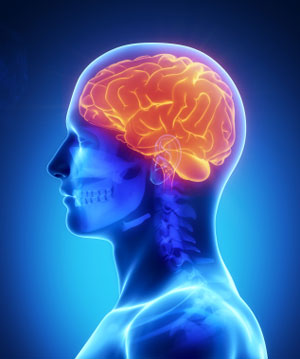
Exercise and the BrainMost people know that exercise is good for the brain, but to know why that's important you need answers to two critical questions: 
  • What makes the brain succumb to diseases like Alzheimer’s and Parkinson’s?
  • What is the best type of exercise to maximize the brain benefits?
Major degenerative diseases in the brain are all caused by one thing – mitochondrial decay in the brain.  Scientists classify degenerative brain diseases differently based on their symptoms and which region of the brain region they affect, but they all have the same cause.  Why is this a good thing?  Because it means that what‘s good for preventing one disease is also good for preventing others.  And because the primary factors for determining your susceptibility to brain disease is not genetics.
Mitochondrial decay causes brain disease, and which one you get depends on where you experience decay.  If it dominates in the hippocampus, you get Alzheimer’s.  If it dominates in the substantia nigra, you get Parkinson’s. 
And surprisingly, genetics is not your biggest determining factor.  Even if you have a defective gene, something in the environment has to activate it.  Michael J. Fox’s Parkinson’s was considered genetic until three other people who worked at the same Canadian TV studio in the 1970s also developed it. 
Brain Damage
Your brain uses 20% of the calories you consume.  As a result, it has a large number of mitochondria and experiences a by-product of energy production called free-radical production.  Free-radical injury to the mitochondria progressively reduces its ability make ATP.
The worst damage to proteins occurs at the inner membrane of the mitochondrion.  In harnessing the light (all food is essentially light turned into edible form) to give us energy, the mitochondria inevitability suffer damage by free radicals.
These are the four main processes of mitochondrial decay:
  • Decline in energy supply, mostly from free-radical damage to the mitochondrial membrane
  • Cumulative free-radical damage to lipids and proteins inside the cell, which turns them rancid
  • Chronic inflammation in the brain, caused by free-radical driven overexpression of the inflammatory cascade
  • Free-radical damage to mitochondrial DNA, which destroys bits of genetic code
What Can You Do About It?
Protecting your mitochondria is your best chance at preventing brain decay. Here are three main methods you can use:
  • Take mitochondrial antioxidants
  • Eat aromatic spices
  • Manage chronic inflammation
To prevent oxidative stress to mitochondria, which has been associated with Alzheimer’s and several other diseases, look into mitochondrial antioxidants. Lipoic acid, glutathione, acetyl-carnitine, CDP choline, green tea and Vitamins A, C and E can protect your brain. The list of all mitochondrial antioxidants is too extensive to list completely.
Aromatic spices such as turmeric, cinnamon, ginger, cloves and red pepper (cayenne) are all strong anti-inflammatories.  And of course, managing stress plays a large role in managing inflammation.  Most modern stressors don’t require a physical response.  Instead of fight-or-flight, it’s stew-and-chew.  We stress over our retirement, our kids’ schooling, our careers, traffic – none of which requires a physical response.  But the brain doesn’t know this – it interprets stress as a fight-or-flight event, so we often end up eating more when stressed. The downside of that is stress hormones that get pumped out never get used up by physical activity – that’s where exercise comes in!
Keeping your brain buff doesn’t just mean exercising; it means participating in the right type of exercise, which means more than just walking.  Physical activity boosts a protein (BDNF or brain-derived neurotrophic factor) that protects neurons from damage.  If we have enough BDNF flowing around our brains, we can handle any amount of stress.
Greenough worked on an experiment in which running rats were compared to others that were taught complex motor skills, such as walking across balance beams, unstable objects, and elastic rope ladders.  After two weeks of training, the acrobatic rats had a 35% increase of BDNF in the cerebellum, whereas running rats had none. 
The point is that your workout regimen has to include skill acquisition and aerobic exercise.
Essentially, exercise has to stimulate the senses, engage you and perhaps be a little bit “scary.”  Use simple math problems during exercises (even goes left, odd goes right, etc.), bounce a tennis ball around or kick a pebble back and forth while going for a walk, use random patterns with medicine ball tosses – the ideas are limitless.  Insert some skill acquisition and cognitive processing into exercise and you’ll greatly enhance the brain benefits, and get the brain one step closer to buff!

Source Johnathan Ross /Ace