Showing posts with label functional training. Show all posts

Monday, 11 May 2015

Bodyweight Training - And Real Functional Fitness

Bodyweight training- and real functional fitness
Most trainers and fitness gurus and so called hard guys only read about functional fitness they have no idea what functional fitness really is. Reading about functional fitness and working as a labor for a few months does not make them an expert.

You want an expert on functional fitness you find a laborer that trains and is extremely fit. Flipping tires, pushing wheel barrows, pulling a weighted sled for an hour 3 times a week is not labor intensive. This type of training is for the pencil pusher. The non laborer.
I have watched men hit a tire with a sledge hammer to build some core strength try breaking up some rock and then tossing it in the back of a truck.
I seen a video's of MMA training camps where they were pushing wheel barrows with weight plates and the wheel barrow had two wheels on the front, where's the strength building in that ?
A wheel barrow with one wheel is twice as hard and will work a ton of stabilizing muscles. Watch a laborer who fills a wheelbarrow full of stone weighing 300 to 600 lbs using a shovel in a one wheeled wheelbarrow. Think of the stabilizing muscles of the core and the grip strength it takes to move this wheelbarrow and he will do this all day long 8,10,12 hours a day.

I have seen videos of men pulling weighted sleds with 50 or 100 lbs on them, try using a pallet jack and pulling a 2,000 lb pallet around a warehouse or on a loading dock. Who's getting the better workout ? The man pulling the weighted sled or the man pulling around 2,000 lbs.
 
How about the man the loads and unloads a 48' tractor/trailer full of truck tires. Check out the man that has a job as a furniture mover, picking up all odd objects bending , twisting, reaching, climbing steps backwards holding on with their finger tips these are some of the jobs that the average man does to make a living.

Do you think a man has to have a high level of functional fitness to do this day in and day out? What the average laborer does in a day would cripple the fitness guru, if I needed back up in a situation that took heart and real strength it wouldn't be pencil pushing 3 time a week functional fitness trainer.
I have seen college football players,weight lifters, wrestlers, so called tough guys fail in the world of labor they were just not functionally fit and if they were they were for a short period of time and couldn't handle the work day in and day out.
This is where body-weight training will separate the men from the boys.The fact is that a lot of people will tell you that you won't get strong using body-weight only exercises and the fact is that using your own body-weight can and will get you to a different level of fitness that most people will never know. A level of functional fitness that will never let you down. You will go longer. You will stay stronger longer. You will become more explosive and faster. You will become more athletic.
Here's a workout that will build some functional fitness.
You need a 50 to 100lb sand bag or heavy bag and 10 yards.
With the bag on the ground bear crawl around the bag 10 times as fast as possible.
Shoulder the bag and run 10 yards put the bag down bear crawl around it 9 times
shoulder it with the other shoulder continue this until you reach 1 then go back up
to 10. 

Remember to switch shoulders each time.

Source John Grube B.C.S

Wednesday, 28 January 2015

The Do's and Don'ts of Flexibility Training

The Do's and Don'ts of Flexibility Training

While research clearly indicates that joint range of motion is improved acutely and chronically following flexibility exercises, flexibility training continues to be one of the most overlooked aspects of most people’s fitness programs. With a growing focus on functional training to adequately prepare the body to perform optimally, not only when completing exercises in the gym but also when engaging in activities in everyday life, it’s imperative that proper levels of joint mobility be established to ensure quality movement.
While more studies are needed to definitively understand the effect of flexibility training plays in reducing the risk of injuries and minimizing delayed onset muscle soreness, based on the current available research there are some things we know that we should be doing—and not be doing—when it comes to this essential component of a well-rounded workout routine.
Do: Roll it out.
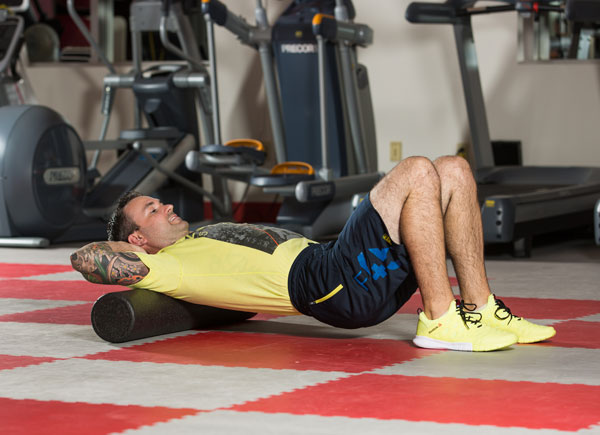
foam rolling
While most people think stretching is the only way to enhance flexibility, self-myofascial release to address tissue density is also effective and should be incorporated into your exercise experience. Beginning your warm-up by using tools such as a foam roller or tennis ball to decrease trigger points or “knots” within the muscles by applying pressure to commonly tight areas of the body can help to relieve tension and increase blood flow. In turn, this helps to enhance mobility and improve overall movement quality. Interestingly, self-myofascial release can also be incorporated into the cool-down to offer even more flexibility-related benefits, as first focusing on tissue density will then help to then address tissue length through the completion of static stretching.
Don’t: Go in completely cold.
jump rope
As noted in the current exercise guidelines, research suggests that flexibility exercise is most effective when the muscles are warm. Therefore, engaging in light aerobic activity—such as jogging, jumping rope or briskly walking—to get the blood flowing to the tissues can prove beneficial before performing static stretches.
Do: Get mobile.
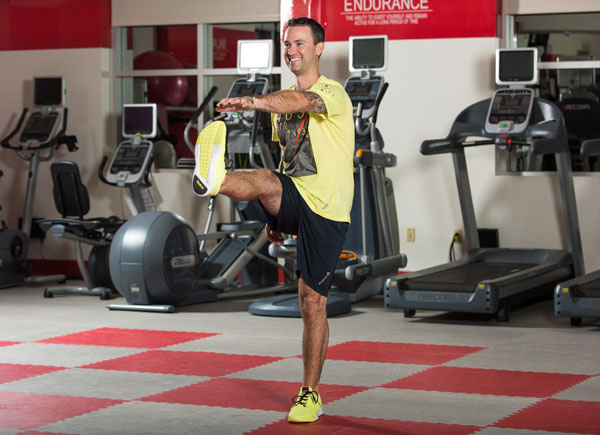
leg kicks
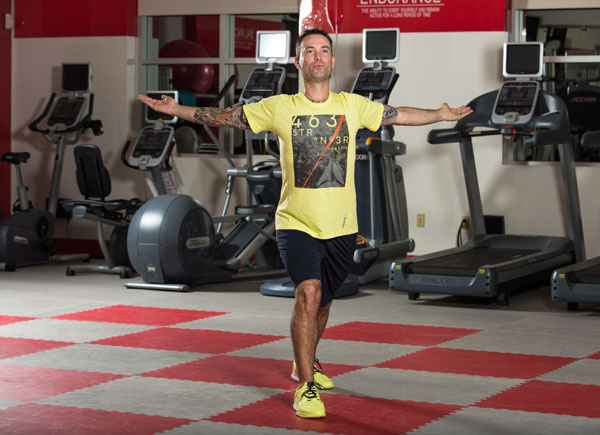
When it comes to injury prevention, ensuring adequate joint mobility is imperative. The body is comprised of joints that tend to favor stability—such as the knees and lumbar spine—and joints that favor mobility—including the ankles, hips, thoracic spine and shoulders. To get more out of your movements, your workouts should include a dynamic warm-up to enhance range of motion in these four areas. This should include movements that mimic the five primary movement patterns: bend-and-lift movements (squatting); single-leg movements (lunging); pushing; pulling; and rotational or twisting movements. The warm-up should serve as a dress rehearsal for specific exercises within a given workout, activity or sport, an to increase core body temperature, address movement deficiencies, improve joint range of motion and reduce the risk of injuries in both the gym and during everyday life.
Don’t: Focus only on one area.
external rotator stretch
Flexibility training, like resistance training, is joint specific, meaning there’s not one specific exercise or stretch to do to improve your overall flexibility. Instead, incorporate a variety of different movements and stretching techniques into your training to target the major muscle tendon units of the neck, chest, shoulder girdle, trunk, lower back, hips, legs and ankles.
Do: Mix up your approach.
upward facing dog
From proprioceptive neuromuscular facilitation (PNF) with a partner to static stretching in mind-body modalities like yoga, mixing up your approach to flexibility will not only offer improvement in range of motion around the joints, it will also keep this component of your workout routine exciting and ultimately more enjoyable.
Don’t: Make it painful.
chest stretch
As is the case with any aspect of fitness, when it comes to flexibility training, you want to feel challenged. However, there’s a big difference between slight discomfort and extreme pain. When performing static stretching, make it a point to stretch only to the point of feeling mild tightness or slight discomfort to ensure the greatest level of safety and effectiveness.
Do: Make it a priority.
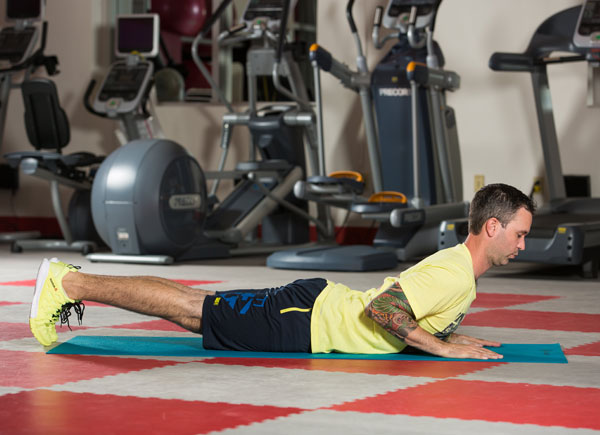
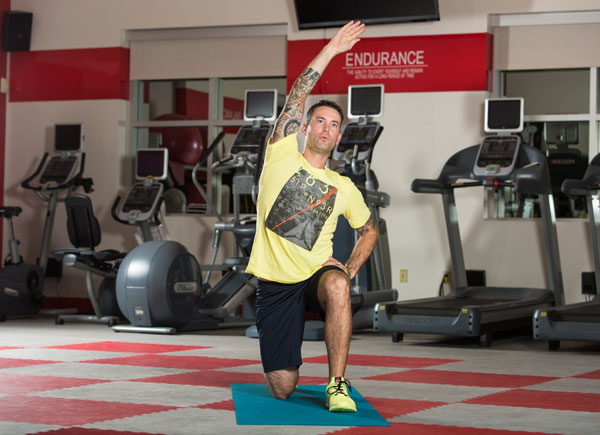
kneeling stretch
Studies have shown that while range of motion around a joint is improved immediately following flexibility exercises, chronic improvements are seen after three to four weeks of regularly stretching at least two to three times per week. For the greatest benefit, perform your flexibility training after your resistance-training workouts and stay committed in your approach to stretching regularly.
Don’t: Skimp on static stretching.
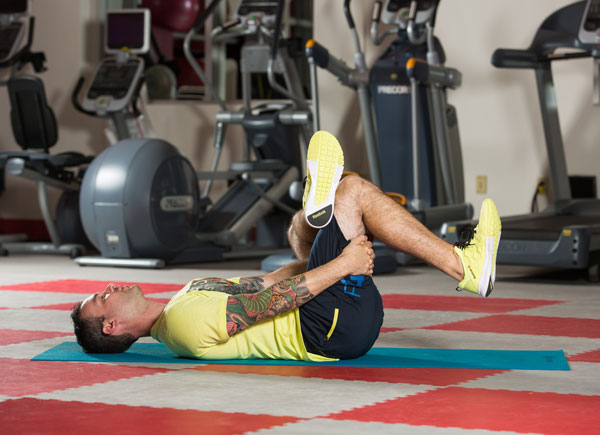
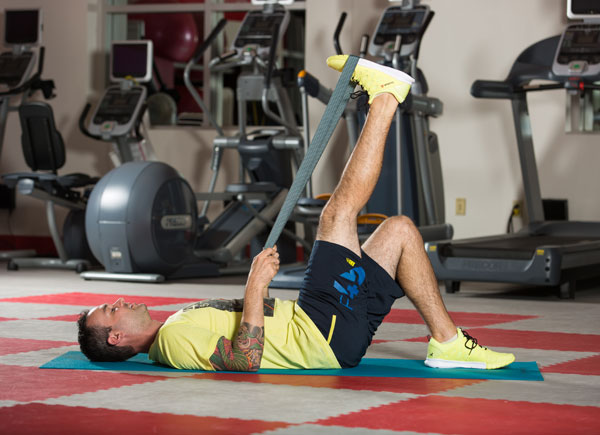
hamstring stretch
For best results, aim to hold each static stretch for 15 to 30 seconds and repeat each one two to four times, completing a total of 60 seconds per joint.

Source : Jessica Matthews, M.S., E-RYT / ACE 


Friday, 2 January 2015

ZUU

An unusual Australian workout trend is taking the UK by storm. Called Zuu, it involves squatting, scrambling and slithering around the gym, just like a wild animal.

This is like no gym class I’ve ever been to before.Check Out My Ankor What is Ankor Training ?
“Bear crawl” yells the instructor and the other six participants drop to the floor, scrabbling around on their hands and knees, clambering towards the middle of the room and back again.“Gorilla!” he yells and there’s a mass swinging of arms and bounding forwards with flat feet. Bemused, I join in, channelling my inner Mowgli as I literally ape what the others are doing. But just as I've mastered the marsupials, we’ve moved on to “Iguanas!” – which involves a sort of slithering plank – followed by “Frog squats!” – dipping and bobbing with bent knees like a hyperactive amphibian.
I feel, and look, utterly ridiculous. But then so does everybody else. We’re clambering and scrambling, rolling and diving, jumping and heffalumping our way around the floor - legs and arms akimbo - in response to the seemingly random animal names that our instructor, Jay Moore, is bellowing at 30-second intervals. Gone are the dour gym-faces we were sporting moments ago. We’re making such a spectacle that a crowd has gathered. Some are so intrigued that they’ve abandoned their cross-trainers to join in.

No ordinary gym class

It's a far cry from my usual inner-city gym experience: sweaty, testosteroney, adrenalin-filled dystopias, where the frenzied hum of machines drowns out my every thought. There's something about them that fills me with dread, from the buff bankers hogging the treadmills, the toned-and-tanned gym bunnies preening in the changing rooms, or the fact that nobody ever speaks or – worse – cracks a smile; they don’t tend to be welcoming places.
Unless, that is, you're at Virgin Active’s Health Club in Aldersgate, east London, pretending to be a lizard.


 The bizarre display is known as 'Zuu', an Australian-born fitness sensation that has just landed in the UK. Virgin Active has been trialling it at three health clubs in the capital and, so successful has it proved, that it's being rolled out across the whole country this summer. Based on primal movements and animal instincts, it’s a combination of strenuous cardio intervals, strength building and agility exercises. With fans including Sir Richard Branson, international sports teams and the military, it’s being hailed as the biggest fitness craze of the year. Better still, it’s as easy as it sounds: simply listen to the name of the animal and start moving around the room as if you're it (sound effects optional).
Invented by Aussie fitness fanatic Nathan Helberg, a father-of-four who describes himself as an “expert in primal pattern movements”, Zuu was piloted in Queensland in 2010. Since then, it’s become one of the continent’s most popular exports, with programmes in the USA, France and Japan. In a recent survey, the American College of Sports Medicine named high-intensity interval training as the top global fitness trend of 2014 – and Zuu aficionados haven’t looked back.

Don't worry about looking silly?

I, meanwhile, am still being put through my paces. Virgin Active’s classes are currently only 15 minutes long (though they have plans to extend them to 45), but boy what a 15 minutes. Lights are flashing before my eyes; my limbs feel like deadweights; I’m sweating from places I didn’t know existed. One of the men drops out halfway through; others are frantically mopping the floor with their towels. Frog follows iguana follows cobra (another slithery one, with a side-to-side stretch); bear follows gorilla follows crocodile (during which I collapse and forget to pay attention).
“The idea is to keep the heart rate nice and high,” insists Jay, when I gasp defeat. “They’re all natural movements that your body should be doing; it’s just that it hasn’t done them in a while. You stop doing this sort of thing when you’re a kid, so Zuu is about recapturing that energy and agility. You’re up on your feet and constantly moving. Don’t worry about looking silly” – this, at the sight of me, derriere in the air, trying to mimic a frog – “because you’ll feel great afterwards.”


Zuu has three main selling points: for all the pain, it’s over pretty quickly; it doesn’t require much space, so it’s perfect for tiny flats; and it gives impressive results. Just 15 minutes of rolling around like you’re at a three-year-old’s birthday party can burn between 500 and 1,000 calories. In real-life terms, that’s two Starbucks double-choc muffins. Or a sharing bag of salt-and-vinegar Kettle Chips. Plus wine. “It hits every part of the body from a fitness perspective,” adds Jay. “Women love it for weight loss or toning; men love it for muscle-building. Your heart rate fluctuates so much that it’s really good for you. If you put the work in, you’ll get so much out.”

Unleashing my inner beast

The name is, in a way, a bit of a misnomer – because not all the moves are named after animals. There’s the “sumo scissor” (a squat followed by kicking each leg alternately); the “thumb rock press” (a particularly undignified number requiring your hips to be in the air and your head to touch the ground) and the “hindu push up” (which reminds me of the ‘worm’, a move that should otherwise only be attempted by break dancers).
There’s even an advanced stage, for when you’ve perfected the animal motions, whereby participants wear a resistance harness to make everything even harder. Feeling energised – or possibly delirious with exhaustion – I try it on for size. It’s like a miniature backpack attached by a lurid orange cord to a gym barre. I look like I’m going abseiling – or trying out for a part in the new Transformers movie. More than a few curious stares shoot my way as I run through my best mammal moves, feeling disconcertingly like I’m on a leash.


Then, suddenly, my 15 clammy, agonising minutes are up. In the communal spirit of Zuu, there are high fives all round – followed by rapid gulping of water and sighs of relief. I feel shattered but refreshed; like I could climb a tree and swing from its branches.
“The number one piece of feedback we’ve had,” says Jay, “is how much fun it is.” I can see exactly what he means. Whether it’s squatting like a frog, pouncing like a tiger or simply hopping up and down to get rid of my kangaroo’s pouch, this is my kind of gym class. People are – whisper it – actually smiling. And all it took was a bit of monkeying around.

Five Zuu moves to try at home

The Gorilla: Think Planet of the Apes. Long, heavy arms and big bounds forward
The Frog Squat: Bend your knees, keeping your feet flat on the floor. Get low – so low you feel your thighs burning – and then pop up, as if on to a lilypad
The Bear Crawl: Bum in the air, hands and feet on the ground. Ditch your dignity and skulk forwards for four steps, then backwards for four
The Iguana: Get into the plank position and move alternate hands and feet forwards. Think Catherine Zeta Jones in Entrapment, minus the cat suit
The Crocodile: As above, but tuck your elbows in and scuttle forwards, jaws snapping.


Source :   telegraph.co.uk/women/womens-health & ZUU creator Nathan Helberg touring the world with Ankorr Director Dirk Gardner