Showing posts with label healthy. Show all posts

Sunday, 13 September 2015

Too tired to exercise ?

Too tired to exercise: Have your iron levels checked

If you already exercise and find you’re approaching your daily workout with excessive fatigue and lack of motivation, see your doctor and have your iron level checked. Your doctor can do a blood test called a ferreting level which measures your body’s stores of iron. Aerobic exercise can cause slow depletion of iron levels with iron being lost through sweating and through leakage of small amounts into the gut with sustained movements. Plus, it’s not uncommon for women of child bearing age to be iron deficient. If you’re iron deficient, iron supplementation may make all the difference in your energy levels and your attitude towards exercise.
   
Too tired to exercise: Exercise when you awaken in the morning

If you feel tired and less motivated to exercise in the evening, try setting your alarm thirty minutes early and get your exercise session out of the way before the day starts. An early morning exercise session can help to energize and motivate you for the rest of the day. Plus, you can look forward to an evening of relaxation knowing you’ve accomplished your goal. This can be a simple solution to the problem of being too tired to work out.

 Too tired to exercise: Do it anyway

Sometimes the best cure for fatigue is a vigorous exercise session. Have you ever noticed how you can walk into the health club exhausted but after thirty minutes of motion you feel energized and invigorated? There’s nothing like exercise to get your blood flowing and zap fatigue. If it’s difficult for you to get motivated to make that trip to the club, promise yourself a small reward after you finish your session if you follow through. Just make sure it’s not a jelly donut!

Too tired to exercise: Lighten up your workout

On nights that you’re too tired to work out, follow a lighter, less rigorous routine. To motivate yourself to take the first step, tell yourself you’ll only exercise for ten minutes. After ten minutes have elapsed chances are you’ll feel so invigorated that you’ll want to keep going.

Too tired to exercise: Change your exercise format

If you feel fatigued with a lack of motivation towards exercise on a particular evening, change your workout entirely and substitute something fun. Instead of walking thirty minutes on the treadmill at the club, take your dog for a brisk walk or do thirty minutes of stretches while you watch your favorite T.V. show. You can get back on schedule the next time you exercise and the variety will be good for you both physically and mentally.

Give these tips a try and soon you’ll no longer need the old excuse of being too tired to work out. Plus, you’ll look and feel like a new person

Damian@FitnHealthy

Tuesday, 7 July 2015

Water And Exercise

The human body is made up of over 75% of water, and as we all know, we cannot live without water.  The fact is, we can only survive for a total of 3 days without water. Water has however, been replaced in most diets by soft drinks and other sugar sweetened refreshments. 
 
 Keep in mind that water is a healthier and necessary for leading yourself towards a better health and longevity.

Your own personal need for water can vary greatly due to exercise, weight, and temperature.  Research has proven that over 2/3 of adults don't get the water they need on a daily basis.  By drinking water on a regular basis you can replenish your body and keep it well hydrated and functioning as it should be.

A majority of us wait until we are thirsty before we drink water.  Keep in mind, this way isn't a
reliable gauge of the water needs for the body.  By the time you are thirsty you have already lost two
of more cups of the body's water supply.  Therefore, drinking water regularly is much better than simply waiting until you are thirsty.

It is very important that you don't substitute beverages with alcohol and caffeine for water.  The
reason behind this is that those types of beverages act as a diuretic and can cause you to lose more
weight through increased urination.  You may think and feel as if you are getting more water through
these beverages, although the fact is that you are letting it go almost as fast as you consume it.

Anytime you exercise, you need more water. Due to perspiration, your body will lose quite a bit of
water.  For each pound lost due to exercise, you need to drink 2 cups of water.  Even when you lay down to sleep, your body loses water.  By drinking a glass or more of water before you go to sleep, you can wake up with your body functioning as it should be.
 
 
It should become more obvious that when you are sick you'll need more water than any other tine.  When you get a cold or the flu, your body can become dehydrated quite quickly.  You can help to prevent this by drinking more water at times when you become sick.

There are several mixed opinions as to whether purified water will actually provide benefit.  This
is a subject you should explore yourself as you determine the best type of water for yourself. 

Always make it a habit to drink water on a daily basis.  You should keep a bottle of water with you
at all times and drink it throughout the day.  You should also teach yourself to drink water instead
of other beverages that don't replenish the nutrients your body needs.

Damian@FitnHealthy

Wednesday, 1 July 2015

Become Healthier, Become Fitter

A look at why being fitter is better for you.

If truth be told most of us want to be a lot fitter then we are. It is something we should all be aiming for, a better level of fitness.

To be honest there will always be something out there that will help, or maybe you can take a little information from each one to build your own fitness regime.

Are there any benefits to being fitter? Guess what the answer is. Yes, fitter is better. Fitter equals less body fat as this is something that is burnt off during exercise and exercise is how to become fitter. You could just diet to become slimmer but your chances of loosing weight will be much greater if you exercise as well as diet.

A fitter person has a lower heart rate which improves your well being and as you will be breathing harder during exercise this will increase your lung function so you will enable your body to absorb more oxygen to feed your brain and muscles.

Being fitter can also have a positive effect on cholesterol levels, reducing LDL cholesterol, (which is good), yet helping to raise the HDL level, (which I understand is also good).

Greater fitness can also help your heart and lower the chance of having a stroke.

Your stamina and strength will increase greatly from working out and this is even more important to people as you get a little older.

A great way of developing a fitness regime is to seek help and your local gym should have a personal trainer, (or you can find your own).

These will advise you on the best way to become fitter and remember they are the experts. A personal trainer knows the things we don’t and it is sensible advice to listen to their advice.

They will not set up a fitness regime that is so strenuous that it will kill you on day one. A personal trainer will help you build up your strength and stamina by developing a sensible program of exercise.


To develop a sensible fitness program we need to consider 4 important areas.

Aerobic exercise is a form of exercise which is low in its intensity but lengthy in its duration. Put simply this means not too hard but goes on a long time such as walking, swimming and aerobics on your own or in aerobic workout classes.

Another way of getting fitter is to pull weights which is known as resistance training. My experience of this training is limited but to do it sensibly start with low weights and build up the weight as your fitness builds up. Remember, be sensible and don’t over do it as you can damage your body easily with unsupervised weight training.

You could take up a fitness regime involving flexibility exercises such as yoga. Remember though you still need to eat a properly balanced diet of sensible foods as part of your fitness program.

Getting fitter can be easy, just do easy exercises a little at a time and then do it properly and intensively. To get fit quick though, consider being advised by a specialist fitness trainer, either a personal one or one based in a gym.

They will help you find out what is best for you.

A personal trainer can, and will, do this. Another thing they can do, which is usually something I need, is they can help to motivate you in order that you can develop your own fitness regime. Becoming fitter takes time and time is something that many of up are short of in today’s modern world.

Damian@FitnHealthy

Monday, 1 June 2015

What Is Kinesiology? An Introduction to Muscle Testing

Kinesiology, or energy kinesiology as it is properly called (to distinguish it from the study of the mechanics of body movement), was created by Dr George Goodheart, a chiropractor, in the early 1960s. Since then, largely through the vision and work of Dr John Thie, who created Touch for Health so anyone can learn to heal with kinesiology without any specialist medical training, kinesiology has spread all over the world.
 
 Many branches of kinesiology have developed, with very different methodologies, because the basic tools of kinesiology are so flexible and adaptable. All the different energy kinesiology schools have two elements in common:
 (1) muscle testing; and 

(2) traditional Chinese medicine. For this very brief introduction to kinesiology I shall focus on the first of these.

Muscle testing is an incredibly versatile and powerful tool. It isn't a therapy in itself, but rather a method that allows information to be communicated by the body. This is comparable with ideo-motor responses in hypnosis, where finger signals (for example) communicate yes and no unconscious responses, and the pendulum, which communicates unconscious yes and no responses by exaggerating barely perceptible unconscious shoulder or arm movements.

Kinesiologists usually prefer to identify unstressed and stressed responses (rather than yes and no responses), but the principle is similar. Put simply: the body's response to a stimulus is tested by applying gentle pressure to a contracted muscle. If the muscle doesn't hold in place ('unlocks'), the body is indicating that the stimulus causes the body stress. If the muscle holds ('locks'), the body is indicating that the stimulus is not stressful.

Not only can the muscle test show when a stimulus causes stress but, when the body is under stress, it can show whether a stimulus counters the stress. So muscle tests reveal stressors and also remedies.
The stimulus or remedy could be a food or substance. Many people who have heard of kinesiology think of it as a way of determining whether foods, remedies or supplements are helpful or not, or whether a person has a sensitivity to a food or substance. But the stimulus can be 'psychological': the thought of an activity, circumstance, memory, person and so on can create a stressed or unstressed response in the body, indicated by a muscle test.

For example, if you think of a past experience which still troubles you, or a person who upsets you, or a situation that taxes you, your body will indicate the stress through an unlocking muscle response. Muscle tests can also indicate an activity, remedy or other solution that counters the stress.
The art of muscle testing takes time to master but is easy to learn and will enhance any healing method. It can identify particular stresses and the best methods to heal them. This makes muscle testing a very powerful tool indeed.

Source Jonathan Livingstone| Ezine


Friday, 1 May 2015

Keep Your Brain Buff

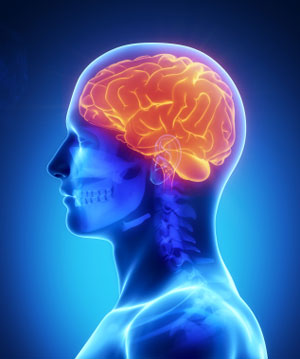
Exercise and the BrainMost people know that exercise is good for the brain, but to know why that's important you need answers to two critical questions: 
  • What makes the brain succumb to diseases like Alzheimer’s and Parkinson’s?
  • What is the best type of exercise to maximize the brain benefits?
Major degenerative diseases in the brain are all caused by one thing – mitochondrial decay in the brain.  Scientists classify degenerative brain diseases differently based on their symptoms and which region of the brain region they affect, but they all have the same cause.  Why is this a good thing?  Because it means that what‘s good for preventing one disease is also good for preventing others.  And because the primary factors for determining your susceptibility to brain disease is not genetics.
Mitochondrial decay causes brain disease, and which one you get depends on where you experience decay.  If it dominates in the hippocampus, you get Alzheimer’s.  If it dominates in the substantia nigra, you get Parkinson’s. 
And surprisingly, genetics is not your biggest determining factor.  Even if you have a defective gene, something in the environment has to activate it.  Michael J. Fox’s Parkinson’s was considered genetic until three other people who worked at the same Canadian TV studio in the 1970s also developed it. 
Brain Damage
Your brain uses 20% of the calories you consume.  As a result, it has a large number of mitochondria and experiences a by-product of energy production called free-radical production.  Free-radical injury to the mitochondria progressively reduces its ability make ATP.
The worst damage to proteins occurs at the inner membrane of the mitochondrion.  In harnessing the light (all food is essentially light turned into edible form) to give us energy, the mitochondria inevitability suffer damage by free radicals.
These are the four main processes of mitochondrial decay:
  • Decline in energy supply, mostly from free-radical damage to the mitochondrial membrane
  • Cumulative free-radical damage to lipids and proteins inside the cell, which turns them rancid
  • Chronic inflammation in the brain, caused by free-radical driven overexpression of the inflammatory cascade
  • Free-radical damage to mitochondrial DNA, which destroys bits of genetic code
What Can You Do About It?
Protecting your mitochondria is your best chance at preventing brain decay. Here are three main methods you can use:
  • Take mitochondrial antioxidants
  • Eat aromatic spices
  • Manage chronic inflammation
To prevent oxidative stress to mitochondria, which has been associated with Alzheimer’s and several other diseases, look into mitochondrial antioxidants. Lipoic acid, glutathione, acetyl-carnitine, CDP choline, green tea and Vitamins A, C and E can protect your brain. The list of all mitochondrial antioxidants is too extensive to list completely.
Aromatic spices such as turmeric, cinnamon, ginger, cloves and red pepper (cayenne) are all strong anti-inflammatories.  And of course, managing stress plays a large role in managing inflammation.  Most modern stressors don’t require a physical response.  Instead of fight-or-flight, it’s stew-and-chew.  We stress over our retirement, our kids’ schooling, our careers, traffic – none of which requires a physical response.  But the brain doesn’t know this – it interprets stress as a fight-or-flight event, so we often end up eating more when stressed. The downside of that is stress hormones that get pumped out never get used up by physical activity – that’s where exercise comes in!
Keeping your brain buff doesn’t just mean exercising; it means participating in the right type of exercise, which means more than just walking.  Physical activity boosts a protein (BDNF or brain-derived neurotrophic factor) that protects neurons from damage.  If we have enough BDNF flowing around our brains, we can handle any amount of stress.
Greenough worked on an experiment in which running rats were compared to others that were taught complex motor skills, such as walking across balance beams, unstable objects, and elastic rope ladders.  After two weeks of training, the acrobatic rats had a 35% increase of BDNF in the cerebellum, whereas running rats had none. 
The point is that your workout regimen has to include skill acquisition and aerobic exercise.
Essentially, exercise has to stimulate the senses, engage you and perhaps be a little bit “scary.”  Use simple math problems during exercises (even goes left, odd goes right, etc.), bounce a tennis ball around or kick a pebble back and forth while going for a walk, use random patterns with medicine ball tosses – the ideas are limitless.  Insert some skill acquisition and cognitive processing into exercise and you’ll greatly enhance the brain benefits, and get the brain one step closer to buff!

Source Johnathan Ross /Ace
 

Sunday, 4 January 2015

What Does Being Fit Really Teach Us?

We make choices in life. Each one of us is unique in our own ways. As individuals, our minds are in control of everything - those that we do, those that we want to do and those that we want to have. Our eagerness and determination to work hard in achieving the things that we think we can't do or the things that we think we can't have will determine our future.
Physical fitness as described in Wikipedia, is a general state of health and well-being or specifically the ability to perform aspects of sports or occupations. Physical fitness is generally achieved through correct nutrition, exercise, hygiene and rest. It is a set of attributes or characteristics that people have or achieve that relates to the ability to perform physical activity. Physical fitness means being healthy and free from illness and the ability to be involved in physical activities, such as running, jumping, swimming, weight lifting, etc. Since our first few years in school, we have been introduced to physical fitness and sports. Some of us discovered our talents and became athletes. Others would always try their best to excel in sports even if they believe that they don't have the said talent. They are those people who believe in the saying, "Hard work beats talent when talent doesn't work hard." Now, let's talk about those who are neither athletes nor enthusiasts. They are these type of people:

1) An average guy who wants to look better, have bigger arms, broader shoulders, thicker chest and finely carved abs.
2) A person who thinks he or she is fat and aims to have a smaller waistline or a flat tummy.
3) A skinny guy who wants to build more muscle.
4) A man or a woman who wants to become stronger and feel better.
5) An elderly who is fighting a disease and was advised by the doctor to start exercising. The main goal is to look better. Next is to feel better, stronger and healthier.

In my own opinion, physical fitness is a complex state. It is a definition of how a person lives his or her life. It is an enigmatic evidence of feeling great from inside out. It is a result of discipline, hard work, humility, curiosity, and perseverance.
These characteristics, for me, are the main ingredients in becoming successful in your fitness goals.


DISCIPLINE
Not eating your favorite comfort food or not drinking your favorite soda, getting yourself tired three, four or five times a week, spending your time running outside instead of just lying in bed - these are not a good idea to many. When you have discipline, you know that you have to do what you don't want to.

HARD WORK
Focusing on your goal, looking forward to achieving your desired body or physical ability and pushing yourself hard are not really hard to do at all. Always tell yourself to strive more for better results. Hard work pays off at the end of the day.

HUMILITY
Always keep in mind that you don't need to be better than someone else. There will always be that person who looks better than you or is stronger than you. Sometimes you will be that person too. There is no competition with anyone but yourself. Bragging about what you have will get you nowhere.

CURIOSITY
There are a lot of fitness experts and magazines online nowadays. Social media is one of the best ways to get advice and tips from. You only need to take the time to read those advice and tips and try applying them. Having a friend who is experienced in physical fitness will also be a bonus. But also limit yourself to hearsay.

PERSEVERANCE
There will be times that you get frustrated, unmotivated, hopeless and unprogressive. Don't just quit right away. Remember the first day of your workout until the next weeks, months and years that you feel a lot stronger than ever before. Never think of giving up and put to waste what you have already started. You will notice the changes in your body as you take pictures every now and then, either monthly or bimonthly, or anytime you want to take note of your progress.
As you take the journey to achieving your goals and having the physique that you always wanted, you will eventually learn and practice the qualities mentioned above. You will also get used to eating healthier foods and limit or exclude those unhealthy ones in your everyday meal. You will start to add and love more protein, green and leafy vegetables, healthy fats and fiber to your diet. But remember, there is no perfect diet, a very good advice or an excellent trainer to help you with your goal if your mind is not set to work with keen interest. In addition, you'll be more successful if you keep an open mind and be teachable all the time.

Although there will be times that you feel like your expectations are not met. You will feel like there are no changes in your body as how you want it to be. You'll be in the stage of reaching the so-called plateau and you notice that there is no progress anymore, you're not getting any bigger, leaner or stronger. Your only competition here is yourself. Every time you look in the mirror, you will see that person in front of you. You would always want to look better than that one there. Every time you feel like quitting, every time you feel tired and losing the drive, just think of what you will achieve when you keep going. You need to decide where you want to be. Are you contented with what you just have? Would you just accept the fact that you can't achieve something new for yourself? Or would you want to experience the triumph of conquering your limitations? As the great Arnold Schwarzenegger said, make your mind work for you, not against you. You just have to be patient, continue doing what you have started, keep an open mind because everyday is a learning process, enjoy yourself until the day you realize that you have already reached your goal. By then, you will know exactly what I'm talking about right now.

Source: Art Forrosuelo  http://EzineArticles.com/8747921

Monday, 15 December 2014

Apple's iWatch and HealthKit: What They Mean for Health and Fitness Pros and Their Clients

The fusion of technology and the fitness industry continues at warp speed. This brings both excitement and concern, with users around the world waiting for the release of the new iPhone 6, new iOS 8 and the closely guarded Apple iWatch. Rumors suggest the devices will be both fashionable and practical.
Wall Street has also been watching the buzz around the new Apple products, as this is the most significant event for Apple under the leadership of Tim Cook (and not Steve Jobs). With the introduction of HealthKit, it is also Apple’s attempt to make the iPhone not only the center of the user’s digital world, but also of his or her physical world as well.
The HealthKit framework within iOS 8 will offer more health and fitness functionality by linking devices with a user’s health information, using the iPhone as the central hub. Now users will be able to capture and monitor health and fitness information such as pulse, steps, blood pressure and sleep habits. These health measures offer a clear and current overview of a person’s overall well-being. While it is true that individual apps have been doing this for years, the new HealthKit will allow these health and fitness apps to sync data about the user’s health and fitness across a variety of wearables and apps, organizing them all into one dashboard application—the iPhone.
Within the fitness industry, excitement started a year ago when Apple hired fitness-industry expert and ACE Pro Jay Blahnik as one of the first of many hires specific to health and fitness. After years spent consulting with Gatorade, Nautilus, Schwinn and Nike, Blahnik was all in with Apple. In December 2013, Apple met with the Food and Drug Administration, the U.S. governing arm of the federal government for all things medical, to discuss mobile medical applications, likely to ensure that HealthKit would not cross a regulatory line.
This is exciting news for our industry, so how can personal trainers and health coaches benefit from such technology? Here are three things I will be watching for in the weeks and months that follow the announcement:
Being Connected. Our world continues to become even more connected. It is through being connected that trainers and health coaches can engage with their clients, keeping them on the path to wellness. Through the new iPhone platform, clients will be able to share with you integrated insights into their daily lives (activity, sleep, steps, food, pulse rate, etc.) that wasn’t previously possible. No longer will you need to guess what your clients did outside of training or if they took your advice—it will all be there with a click of a button. How’s that for accountability? New business models for training and coaching will be developed to take advantage of this technology and the job of a trainer or coach will no longer be limited to inside the four physical walls of a gym, opening up new markets not only down the street but around the world.
Deeper Collaboration. We’ve seen that it takes a team to make a real difference in the lives of our clients. From trainer to physician, coach to nutritionist, the power of collaboration, being in sync and in real time, is one highlight of the new HealthKit. It will take time for each team member to understand his or her place in the overall HealthKit matrix, but what is exciting is the possibility of overall health for our collective clients. More teamwork between practitioners allows trainers and coaches to stay within their scope of practice and seek partnerships with others in the healthcare industry.
Proceed with Caution. Apple is late to the game with regards to fitness tracking, but many expect it to succeed where others have not. While Jawbone and FitBit do a good job of tracking activity, many consumers still see wearables as “unstylish” and the buzz of the wearable soon wears off with a sharp decline in use after just six months. A device has yet to emerge with enough authority to encourage mass adoption (not good if you are relying on this data). Apple could change that perception with their historic strengths in design and new hires in fashion, which means more people will be more inclined to wear a device and thus more health data will be collected.
As we share more personal and confidential information across the cloud, there will be more debate surrounding security and privacy with this type of information. Apple has taken steps to ensure our privacy, with requirements that apps using HealthKit not store information on the cloud and not share information without user consent. Of course, there will always be a risk when sharing data through the cloud, but does the benefit of sharing outweigh the concern over privacy? Or vice versa?
Remember, Apple is not the only kid on the block using smartphones for health. In the US, there are nearly 170 million cellphone users, 70 percent of whom use smartphones. Within the smartphone category, the iPhone is by far the most popular, with 42 percent of users, followed by Samsung at 28 percent, 7 percent for LG, 6 percent Motorola and 5 percent for HTC. However, when looking at the operating systems of these smartphones, Android takes the lead with 52 percent, Apple at 42 percent, and Microsoft, BlackBerry and others making up the remaining 8 percent (ComScore, 2014). The takeaway? If you only work with Apple, you will be missing out on 58 percent of the population that uses a smartphone other than an iPhone.
I am a believer in effective uses of technology and am excited about the Apple announcement, as well as the upcoming announcements from Microsoft and Google within the health and fitness space. New technologies and innovations like the iPhone, the Apple iWatch and HealthKit are not a magic bullet, but they can be a very powerful tool that, when properly implemented into trainers’ and coaches’ businesses, can lead to new clients, new revenue streams and new partnerships. These technologies will never replace a qualified and certified personal trainer or health coach. After all, clients hire us for our knowledge and accountability, but they keep us for our personality and ability to connect with them.

Source : By Ted Vickey Ted Vickey Ted Vickey, M.S., is the Senior Consultant - Fitness Technology for ACE. He’s been an ACE Certified Personal Trainer since 1992

Tuesday, 25 November 2014

Why we need to add Supplements in our Daily Nutrition….

I used to be that person who believed wholeheartedly in only eating “whole” foods. What does the term “whole” mean anyways? Well, it is defined as a food that is processed and refined as little as possible. So in essence this means all of your fresh fruits and vegetables, whole grains, and lean meats. As a health nut, I honestly believed this was the ONLY way to go, and some still do. It is simply a matter of opinion and your beliefs. I still felt as if I was missing something because I felt sluggish, tired, and had cravings all the time. I know I was eating enough food and taking in all of the right nutrients (so I thought), but what was I missing? Did you know that our fresh fruits and vegetables are missing 80% of their nutrients!? WHAT!?? Even when we do have good intentions of eating the right foods, we are still missing out on all of this wonderful nutrition we are supposed to be getting. THAT IS INSANE!!


There are quite a few reasons as to why our fruits and vegetables are so nutritionally bankrupt and other reasons why we need the supplementation from other sources….
1. Herbicides and pesticides are being thrown on our fruits and vegetables to kill all the bugs eating them. Here is the kicker, “kill”. So, this was made to get rid of these creatures, which sure, it does, but it also kills most of the nutrition. Should we really be consuming it?
2. Our foods today are highly processed and prepared in a way which again, destroys much of the nutritional value.
3. Depleted soils! When you have a diet high in fruits and vegetables, chances are you are getting them from a fairly natural source. The problem is most soils are used over and over again to grow fruits and vegetables. With each growth, the mineral content becomes insufficient.

4. Skipping meals! In today’s society, it seems the norm has now become to sleep in as late as we possibly can, then grab a poptart or a bagel on our way out the door….OR we just skip breakfast all together and do not eat until lunch time. These do not count as an entire meal because they are not nutritionally dense and only leave you feeling hungry. images

5. STRESS is another big factor! We all live busy lives; constantly running from place to place leaving little time to eat or even think about getting proper nutrition into your body. Did you know that fueling your body with the right nutrition can help to normalize your bodies functions and help rid it of stress!?
Woman-Stressed-Pulling-Hair-Out ionix_supreme_powder-200x259

These are the biggest factors that come to mind when thinking about supplementing in nutrition. Now, there are MANY supplement companies out there promising to be the very best and that they deliver everything you need, but what they don’t tell you about are all the artificial flavorings and chemicals poured into these supplements that are just as harmful to your body as not getting the nutrients at all. Like many of you, I was a HUGE skeptic of any type of supplement bought off the shelves or any of these fad meal replacement shake companies. I tried many protein powders, but all just left me feeling bloated and crappy.
What to look for in a supplement or meal replacement shake….
1. Soy free
2. Gluten free
3. No sucralose (Splenda) http://institutefornaturalhealing.com/2013/06/splenda-the-little-packet-of-death/
4. Non GMO
5. Where your shakes are being manufactured
6. Belief in the company producing the products
7. Natural ingredients
8. High quality ingredients
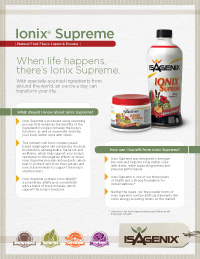
My choice of supplementation is Isagenix. Let me tell you, I have NEVER been a supplement person before. I had taken various protein powders before, but all they left me with was a sour stomach. I was strictly whole and organic foods, but as mentioned before, even that is not always enough. Isagenix protein is undenatured whey and comes from what I like to call “happy” cows in New Zealand. They are strictly grass fed and even fed and milked according to season. Because my body is getting the nourishment it needs, I am left feeling the way our bodies should, ENERGIZED AND HAPPY!!

 Want to know more about Isagenix Products Isagenix Online