Showing posts with label muscle fibers. Show all posts

Wednesday, 16 September 2015

Does Acupuncture Help With Aches and Discomfort?

Acupuncture constitutes one of the oldest forms of alternative medicine that is still being practiced. It is popularly attributed to Traditional Chinese Medicine of the sixteenth century.

The Primitive Take on Acupuncture
The ancient science believed most of the health issues stemmed from the imbalance of energy. The fine, stainless steel needles were used to stimulate the 14 major energy channels in the body, building immunity and resistance to illnesses while helping the patient overcome apparent problems. Acupuncture was known to be an effective remedy for different health concerns ranging from minor aches and discomfort to major health problems.

The Modern Take on Acupuncture
The conventional science today explains the same phenomenon with different words. Instead of talking about "chi" (energy), the modern science explains the process of acupuncture as a means to stimulate specific anatomic sites or nerves in the body. This process seems to have profound impact on the health and well-being of the patient.
 
The modern science has accepted acupuncture as an unparalleled mode of treatment. The process is extremely intricate, demanding years of learning and expertise to locate specific target points on the body. Even the slightest miscalculation can have drastic consequences. This is why it is recommended to seek reputed professionals for acupuncture treatments. The process is now covered under the medical insurance offered by most companies, which explains the modern viewpoint on acupuncture.

Here's how acupuncture is known to help with aches and discomforts.

Acupuncture for Aches and Discomforts
Acupuncture is known to help with aches and discomfort just the way it works for other health problems. The acupuncturist starts by analyzing the body for problem areas, identifying the root cause of the ache. S/he may use additional equipment to identify other characteristics of the body in order to devise the correct treatment.

Small, fine and sterile needles will be used to reach and stimulate the nerves under your skin. This process is usually painless or may be accompanied with minor discomfort. The needles are left for a period of 5 to 40 minutes depending on the need. This does not only help invigorate the nerve cells and muscle tissues, it also steadies the blood flow, ensuring appropriate flow of nutrients to and from all parts of the body.

 In some cases, placement of needles in one part of the body may be able to help relieve tension in another part. The treatment is known to help in managing the pain associated with arthritis, stress, inappropriate posture, fibromyalgia, dental treatment and post-surgery problems. Although the relationship between acupuncture and pain relief is unclear, it nevertheless has helped several thousands of people in achieving optimal health.

In chronic cases, acupuncture will most likely be recommended in addition to other treatments. Acupuncture is not a holistic cure for all health problems. It may, however, be able to help you keep numerous complications at bay. Acupuncture does help in relieving aches and discomfort by revitalizing internal body functions for overall betterment.

Thursday, 20 August 2015

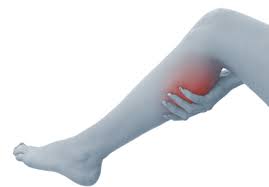
Muscle Cramps: Unmasking the Fitness Dilemma

The article talks about the occurrence of muscle cramps among individuals who want stay fit and improve their health. Rather than taking medication and drugs to treat muscle cramps, individuals are advised to make adjustments in their training routine and diets to lessen the development of muscle cramps.
 
People nowadays are becoming more conscious about their health, recognizing the importance of exercise and physical activities in their lives. Many have been integrating exercises like jogging, skipping ropes, brisk walking, and other similar exercises in their daily routines. However, there are instances that people who exercise, especially those who run or jog, can be vulnerable to muscle cramps. Muscle cramps are the involuntary and forcible contraction of the muscles. These cramps can be related to a part of a muscle, the entire muscle, or a group of muscles. It may occur many times before it is relieved. Sometimes there can be simultaneous cramps that move body parts in opposite directions. Statistics show that about 95% of individuals experience muscle cramps at some point of their lives.

 Muscle cramps can be caused by different factors which may include poor flexibility, muscle fatigue, electrolyte and mineral depletion, excessive physical exertion, and dehydration. Electrolytes are minerals in the blood and other fluids that carry an energy charge. In addition to these causes, muscle cramps can be linked to some factors like improper breathing and unhealthy diets.

Muscle cramps may disappear on their own, but there are some things that can be done to lessen their severity and longevity. Below are some of the things that can be done to treat muscle cramps.

· Stop the activity that triggered the muscle cramp
· Gently stretch the affected muscle
· Keep the affected muscle moving with light activity (standing and walking around)
· Massage the affected area to aid blood flow

Making adjustments in one's training routine may help prevent the occurrence of muscle cramp. Improving one's cardiovascular fitness may also boost the flow of blood to the muscles. A strong heart may guarantee that there are sufficient amounts of oxygen and nutrients in the muscles for them to function properly. Stretching may also help the muscles become more loose and flexible that may stop the muscles from tightening and cramping. Stretching coupled with a good warm-up session may lead to increased range of movements and help prevent injuries and muscle cramps by prompting muscle recovery.
 
In terms of breathing and healthy diets, people who workout should make sure that plenty of water is taken before and while working out to replace lost electrolytes. Deep breaths should be done while working out to allow consumption of plenty of oxygen. Studies show that when oxygen intake is more efficient the following may take place: slower heart rate, decreased blood pressure, eased anxiety, and relaxed muscles. Workouts should not be overdone to prevent the occurrence of muscle cramps. Any cramping usually subside after a few minutes of rest but if individuals are having trouble with their cramps they should seek the advise of doctors of other health specialists.

Rather than seek for the treatments or remedies for muscle cramps engaging in proper pre-workout and workout routines may eliminate or lessen the occurrence of these health ailment. The use of over-the-counter medication to treat muscle cramps is not prohibited. But individuals who wish to try them should consult doctors before taking them and not self-medicate. Proper workouts and healthy diets prioritized rather than taking muscle relaxants and other medications to treat muscle cramps.


Damian@FitnHealthy

Saturday, 1 August 2015

10 THINGS TO KNOW ABOUT MUSCLE FIBERS

Toning up, or improving muscle definition, is one of the most common goals of individuals starting an exercise program. The term tone comes from “tonus,” which is the technical term for a state of contraction of a muscle fiber. If all of the fibers within a muscle contract, it creates the shape commonly associated with a well-defined muscle. 
The primary purpose of muscle fibers is to control physical forces moving through the body. Muscle-shortening actions can generate a force to move a resistance; for example, when moving from a seated to a standing position, the quadriceps and gluteus maximus shorten to help the body stand up against gravity. Muscle-lengthening actions can be applied to control and decelerate a force; for example, the quadriceps and glutes lengthen to control the motion of the body as it returns to a seated position. If you are interested in designing exercise programs that produce results, it is important to have a good understanding of how muscle fibers work and respond to exercise. 

To more effectively help your clients achieve their fitness goals, keep in mind these important facts about muscle fibers and how they are affected by exercise: 

Muscle fibers adapt to the specific type of exercise stimulus imposed during training. Mechanical stress refers to the physical stresses applied during resistance training, which cause microtrauma to muscle fibers. As fibers are damaged from exercise, they signal the biochemical reaction to produce new satellite cells responsible for repairing the mechanical structure of the muscle cell and for building new muscle proteins.
Muscle fibers are activated by a motor neuron, which is the connection between the central nervous system and the specific muscle required to perform a particular activity. A muscle motor unit is the motor neuron and the attached muscle fibers. Think of a motor unit as a light switch for the muscle—as a muscle is required to generate a force, the motor units will “light up” to stimulate the fibers to shorten in order to produce that force. There are a number of different muscle unit types, which are typically organized into three general categories: type I, type IIA and type IIB
According to the all-or-none theory, a motor unit is either active or inactive. When it is signaled to contract, it activates all of its attached muscle fibers. Slow-twitch motor units have a low threshold for activation and low conduction velocities, and are attached to type I muscle fibers. Fast-twitch motor units have a higher activation threshold, are attached to type II muscle fibers and are capable of conducting signals at higher velocities, resulting in greater amounts of muscle force.
Type I fibers are known as aerobic fibers. These fibers have a higher density of mitochondria, which are efficient at aerobic metabolism (the process of creating energy to fuel muscle activity with oxygen). The mitochondria give the cell a darker color, which is why these are known as red muscle fibers. Type I fibers use oxygen to create energy for lower-intensity, long-term, endurance-oriented activities like walking, running, swimming, cycling or standing for extended periods of time. 

Type IIB fibers are known as anaerobic muscle fibers. Type IIB fibers store energy that is released for short, explosive, extremely high-intensity activities. Type IIB fibers do not have mitochondria and have a colorless appearance, which is why they are known as white fibers. Because they have a limited supply of stored energy, and thus fatigue quickly, Type IIB fibers are used for strength and power activities requiring a high amount of force in a short period of time.

Type IIA fibers have mitochondria, so they can be involved in aerobic activities; however, they can also be used to produce force rapidly during activities requiring a high amount of strength or power. Fast-twitch muscle fibers also have a greater diameter than type I fibers and play a more significant role in hypertrophy (the technical term for muscle growth). Recruiting and innervating type II muscle fibers requires creating enough mechanical overload to fatigue the involved muscle by the end of the set.

Muscle fibers work according to the size principle. As a muscle requires force, it will start by activating the smaller type I motor units. When these type I motor units can’t provide the necessary force (or fatigue), the larger type II motor units and muscle fibers are recruited to perform the work. A muscle has a finite number of motor units and the higher-threshold type II motor units are not “turned on” unless a high level of force is needed. The most common way to increase motor unit activation is to lift heavier weights, because an increased load placed on a muscle will cause a greater number of motor units to activate more fibers to generate the force necessary to overcome the resistance. This is why your muscles shake when you try to lift a heavy weight for the first time—muscle motor units not previously used are being “woken up” and called into action.

Muscle fibers experience two specific types of hypertrophy. Myofibrillar hypertrophy refers to the increase in size or thickness of individual actin and myosin protein filaments, which can improve the force-production capacity of individual fibers. Myofibrillar hypertrophy does not lead to larger muscles; rather, it results in thicker muscle fibers capable of generating more force. Sarcoplasmic hypertrophy is an increase in the volume of the semifluid interfibrillar substance surrounding an individual muscle fiber. This fluid contains the proteins used to promote tissue repair and growth. The muscle “pump” that bodybuilders work to achieve is actually sarcoplasmic hypertrophy—the cross-section of muscle fibers will increase, but most of the enhanced muscle size is due to an increased volume of the sarcoplasm and non-contractile proteins not directly involved with force production.

One of the long-term adaptations of muscle to resistance training is an increase in muscle fiber cross-width. As the cross-sectional area increases in size, the fibers have more surface tension and become capable of generating higher amounts of force. Muscles with a larger cross-sectional area of individual muscle fibers are capable of producing greater amounts of force. In addition to being responsible for producing the force necessary for dynamic movements, type II muscle fibers have a greater diameter (cross-width) than type I fibers and are responsible for the hypertrophy, or increased size, of a particular muscle.

Type IIA and IIB muscle fibers are responsible for generating movement as well as muscle size and definition. Both classifications of type II muscle fibers create higher levels of force to produce human movement and are known as phasic muscles. Type I fibers are responsible for maintaining postural and joint stability, and can be categorized as tonic muscles. 

Source Pete McPete McCall | ACE 

Friday, 31 July 2015

A Brief Guide To Exercise Stretching

The majority of us spend a large chunk of our day in a seated position. Think about it, you sleep for 7-8 hours and most of that may be in the foetal position, you get up maybe drive to work...in a seated position and then get behind a desk, when you get home you sit in front of the TV to unwind. Added to this if you do take some time out for exercise, can you honestly say that you finish your session with a good stretching routine? Just think of your poor bunched up muscles crying out for a BIG stretch!

I realise that I've just made a big generalisation but it hopefully helps you to understand where I'm coming from. There are many forms of stretching and much opinion of when it's better to stretch, before exercise, during, after or none at all! Some people think that we should stretch whether we exercise or not and others don't. So it can be confusing.
To keep it simple this advice is aimed at those who want to carry out a static stretching routine on its own and not before or after an exercise session. I don't intend to add any new theories to this debate but what I do want to do is to keep it clear and and concise, so read on!

Benefits of Stretching:

* Can improve your flexibility. 
* Helps you to relax. 
* Reduces the risk of joint sprain or muscle strain. 
* Can reduce the risk of back problems. 
* Can reduce post exercise muscle soreness. 
* Can reduce tension in the muscle.
Warming Up. Before starting your stretch routine I would recommend that you 'warm up' your muscles prior to doing so. Stretching is often mistakenly thought of as a sufficient way of warming up your muscles but its important realise that a gentle warm up prior to stretching is a safer option as your warm up routine will increase blood flow to your muscles and therefore reduce the chance of injury prior to stretching.

A gentle warm up should consist of light rotation of the joints such as the shoulders, hips, knees and ankles followed by gentle to brisk walking or walking/jogging on the spot. This should last approximately 5 minutes or so until you feel warm and slightly out of breath.
Types of Stretches. Stretches can be split into 5 different techniques: Static, Ballistic, Passive, Ballistic/Dynamic and Proprioceptive. If you are a beginner I would recommend the simplest and easiest technique to ease you gently into it which is the Static stretch where you stretch the muscle to a point where you feel the tension and holding the stretch for approximately 15-20 seconds.
Static stretching can improve your flexibility over time and is one of the safest forms of stretching. Good luck with your journey to improved flexibility!

Damian@FitnHealthy

Sunday, 26 July 2015

Difference Between BMI and BMR Calculators

Unlike Basal Metabolic Rate (BMR) Body Mass Index (BMI) is determined by an individual's height and body weight. It is widely used to determine whether the individual belongs to a healthy weight group. In simpler terms body mass index is the value that represents the weight status of human body in relation of the amount of fat present in it. Similar to Basal Metabolic Rate now it is also possible to easily calculate body mass index using BMI calculator for men and women. Similar to BMR calculator, body mass index calculators are simple tools those can be used for figuring out the amount of excess body fat present in one's body and also have a clear idea of the risks associated with this excess weight.

Body mass index is calculated depending upon the height and weight of an individual man and woman and can be broken down into four categories - underweight (BMI less than 18.5), normal (BMI between 18.5 and 24.9), overweight (BMI between 25 and 29.9) and obese (BMI is 30 or higher). According to researchers and experts these numbers are just fine as a general measurement of obesity for close to 95% of the population. But traditionally obesity has been defined as a certain cut off in the BMI scale and judging a person's obesity depending upon only his height and body weight, which is done by any BMI calculator for men and women is probably inadequate and not sufficiently efficient too. For people who are overweight but still maintain a good health - there body mass index doesn't properly reflect the health risks associated with their excess weight.

BMI and BMR calculator for both men and women are now widely used by doctors and health care professionals as quick screening tools but the BMI calculator for men that is now being widely used also has a number of possible drawbacks users are required to be aware about. One major drawback of both BMI and BMR calculators is the fact that they don't reveal anything regarding body composition like the amount of muscle and fat present in the body. This is a reason that conclusions based upon the results of these calculators might not always be accurate and also misleading in certain situations. People like players or body builders whose weights are pushed up by their muscle tissues have body mass index that is pretty high but they also have only little body fat. Activity level of the concerned individual, body type and location of fat in the body, age and ethnicity are other factors those should also be playing determining role in Basal Metabolic Rate and body mass index calculation but the current calculators those are now being offered online don't involves this factors in their calculations and that is precisely the reason that the results they show are only accurate up to a certain standard and it might not be a very good idea to fully depend upon them.

Source Harish Shinde | GO