Sourced By Pete McCall, MS McCall has an MS in Exercise Science and Health Promotion
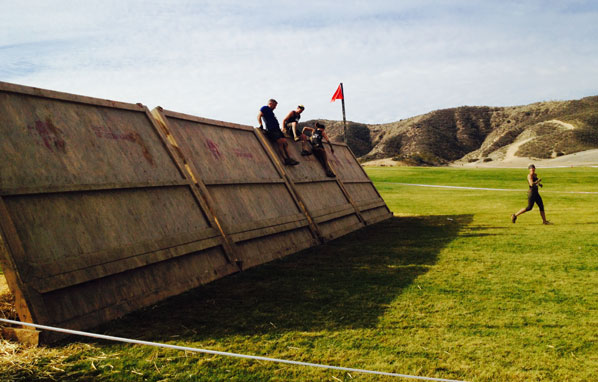
Wading through chest-high water, running up muddy hills, climbing
over walls, swinging on monkey bars and crawling through mud might seem
like challenges for soldiers in basic training, but these are just a few
examples of obstacles from popular racing events that have
significantly changed the recreational fitness landscape over the past
few years. While standard running distances like 5 kilometers (3.2
miles), 10 kilometers (6.4 miles), or a 26.2 mile marathon primarily
challenge aerobic endurance, obstacle course races provide a greater
fitness challenge by requiring upper-body strength combined with
anaerobic power. Individuals who exercise frequently and value physical
activity as part of a healthy lifestyle also enjoy testing themselves
with demanding fitness challenges. For many, completing a challenging
obstacle course provides a sense of accomplishment that traditional
running races can’t offer.
What is an Obstacle Course Race?
An “obstacle course race” is a generic term for a type of running
race that has exploded in popularity in recent years. A typical obstacle
course run can range from 5 kilometers (3.2 miles) to 10+ miles in
length and feature numerous obstacles like mud pits, ice baths, tunnels,
walls or even the occasional fire pit. Events such as
Warrior Dash,
Spartan Race and
Tough Mudder are examples of races with specific themes and specially designed obstacles. Fans of AMC’s
The Walking Dead can even sign up for races that require participants to dodge
zombies while running an obstacle course. Creative people with an artistic bent can participate in
color runs, where participants wear all white and are splashed with vibrant colors between the start and the finish of the run. The
Boot Camp Challenge
at the Marine Corps Recruit Training Depot in San Diego allows
participants to run a scaled-down version of the obstacle course used in
basic training, with verbal “encouragement” offered by real Marine
Corps drill instructors.
For adults who played competitive team sports up to and through
college it can be tough to find the same sort of athletic challenge once
they’ve entered the professional working world. Obstacle course races
provide a worthy athletic outlet because athleticism and strength are
required to successfully overcome many challenging obstacles. This
allows for the emergence of an inner warrior not easily expressed at
home or in the workplace. Training for and participating in obstacle
course races also allows competitive individuals to have the experience
of a challenging competition without the logistics of committing to a
team practice or an extensive game schedule. In many races, participants
are encouraged to support and help one another; for example, the Tough
Mudder events are not timed and the start includes an oath that
encourages participants to work together to overcome the obstacles and
achieve success.
Marketing Opportunity
If you are looking for unique ways to market your personal-training
services or boot camp, it might be a good idea to offer a conditioning
program to help individuals train
for an upcoming obstacle course race in your area. Registration for
races includes both individual and group options, making them a perfect
opportunity to design a
small-group training program.
Training for a challenging goal in a group environment can develop
friendships, which can help an individual participant develop the
self-efficacy to establish adherence to regular exercise.
If you want to use an upcoming event as an opportunity to promote
your fitness business, start by researching events in your area. Make
sure that you pick one that is an appropriate skill level for your
participants. Keep in mind that some obstacle course events feature
obstacles that are difficult and could cause extreme injury if done
improperly. (Although events don’t require participants to do the
obstacles and offer ways around them, it can be easy for a participant
to get caught up in the moment and try something above his or her skill
level.)
Training for an obstacle course race involves more than just running.
Many obstacles require participants to have the upper-body strength to
lift their own body weight, the coordination to climb over walls and the
flexibility to low-crawl through tunnels or under barbed wire
(seriously). Most races will list the majority of the obstacles online,
leaving room for a few surprises on race day. Another factor is that
some obstacles will require teamwork to overcome, making it important to
include various partner and group drills in the training program.
Review the race course and then design a workout program to prepare
participants for the demands of the competition. Most event websites
list training tips for how to prepare for the race; however, if you want
to brush up on ideas to create a progressively challenging conditioning
program, it might be helpful to check out the
ACE Sports Conditioning workshop to learn how to design energy system-specific exercise programs.
Planning a Conditioning Program
The Tough Mudder series feature courses with approximately 25
obstacles spread out over 10 to 12 miles (due to the variability of the
event venues it can be difficult to have the exact same course at each
different location). This means that a participant can expect to perform
one obstacle about every 0.5 mile or approximately 1 kilometer (0.6
miles). If participants are expected to overcome an obstacle every 1
kilometer or so, it becomes more important to emphasize high-intensity
intervals for running as opposed to the long, slow distance training
typically performed for endurance events.
A combination of climbing over obstacles and running at high bursts
of speed requires the ability to work at an intensity near the second
ventilatory threshold
(VT2,) commonly referred to as the onset of blood lactate (OBLA). To
prepare for the specific metabolic challenges of running an obstacle
course race, a conditioning program should alternate between circuits of
three to five strength exercises, with minimal rest periods between
each exercise, and bouts of high-speed running following a
high-intensity interval training (
HIIT) protocol.
The following sample workout demonstrates how to use strength
training combined with HIIT running intervals to prepare for an obstacle
course race. Other training options include using equipment like heavy
medicine balls, weight sleds, heavy tires, stair running and sandbags.
The idea is to create dynamic and unstable loads to prepare the body for
the challenges it will face during the event. As with any training
program, ensure that the exercises are the appropriate skill level and
intensity for your participants and offer modifications when necessary.
Sample Workout to Prepare for an Obstacle Course Race
Exercise
|
Intensity
|
Work Interval
|
Recovery Interval
|
Repetitions
|
Warm-up:
-Plank
-Side plank
-Standing hip hinge
-High knee skips
-Lateral shuffles
-Backpedals |
Bodyweight (BW)
BW
Jogging
Jogging
Jogging
|
30 sec.
30 sec.
30 sec.
10 meters
10 meters
10 meters
|
1 min after circuit
|
Perform BW exercises as a circuit – 2-3 times
Perform jogging drills as a circuit – 2-3 times
|
Strength Circuit 1:
-TRX Push-ups
-TRX Back rows
-Medicine ball overhead slams
-Mountain climbers |
BW
BW
3-5 Kg
BW
|
45 sec.
45 sec.
45 sec.
45 sec.
|
90 seconds after circuit
|
2-3 circuits
|
Running Drills:
-80 meter sprints
-50 meter sprints |
High
High
|
10-15 sec.
8-10 sec.
|
30-45 sec.
30-45 sec.
|
5
5
|
Strength Circuit 2:
-Medicine ball lunge to chest pass
-TRX Suspended knee-tucks
-Squat jumps
-Inchworm walkouts
-TRX Suspended lunge |
3-5 Kg
BW
BW
BW
BW
|
45 sec.
45 sec.
45 sec.
45 sec.
45 sec.
|
90 seconds after circuit
|
2-3 circuits
|
Running Drills:
-90 meter shuttle run
-200 meter run
-40 meter sprints |
Hard
Hard
High
|
20-25 sec.
30-40 sec.
10 – 12 sec.
|
30-60 sec.
60-90 sec.
10-15 sec.
|
5
5
8
|
Cool Down / stretching:
-Calves
-Hamstrings
-Hip flexors
-Triceps |
|
30 sec.
30 sec.
30 sec.
30 sec.
|
|
1-2
1-2
1-2
1-2
|