Showing posts with label foam roller. Show all posts

Wednesday, 28 January 2015

The Do's and Don'ts of Flexibility Training

The Do's and Don'ts of Flexibility Training

While research clearly indicates that joint range of motion is improved acutely and chronically following flexibility exercises, flexibility training continues to be one of the most overlooked aspects of most people’s fitness programs. With a growing focus on functional training to adequately prepare the body to perform optimally, not only when completing exercises in the gym but also when engaging in activities in everyday life, it’s imperative that proper levels of joint mobility be established to ensure quality movement.
While more studies are needed to definitively understand the effect of flexibility training plays in reducing the risk of injuries and minimizing delayed onset muscle soreness, based on the current available research there are some things we know that we should be doing—and not be doing—when it comes to this essential component of a well-rounded workout routine.
Do: Roll it out.
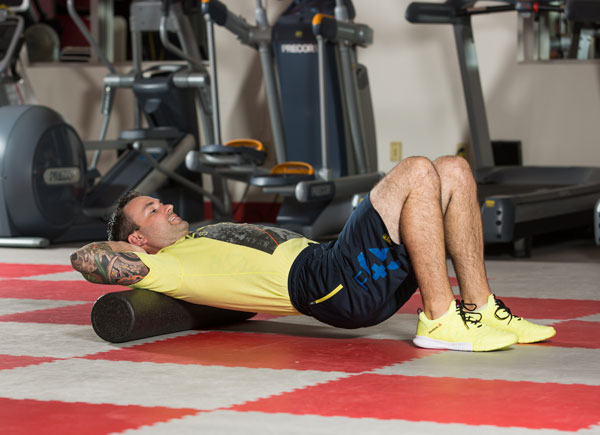
foam rolling
While most people think stretching is the only way to enhance flexibility, self-myofascial release to address tissue density is also effective and should be incorporated into your exercise experience. Beginning your warm-up by using tools such as a foam roller or tennis ball to decrease trigger points or “knots” within the muscles by applying pressure to commonly tight areas of the body can help to relieve tension and increase blood flow. In turn, this helps to enhance mobility and improve overall movement quality. Interestingly, self-myofascial release can also be incorporated into the cool-down to offer even more flexibility-related benefits, as first focusing on tissue density will then help to then address tissue length through the completion of static stretching.
Don’t: Go in completely cold.
jump rope
As noted in the current exercise guidelines, research suggests that flexibility exercise is most effective when the muscles are warm. Therefore, engaging in light aerobic activity—such as jogging, jumping rope or briskly walking—to get the blood flowing to the tissues can prove beneficial before performing static stretches.
Do: Get mobile.
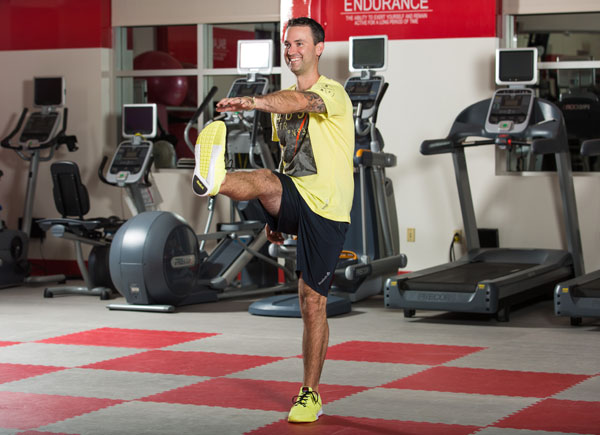
leg kicks
When it comes to injury prevention, ensuring adequate joint mobility is imperative. The body is comprised of joints that tend to favor stability—such as the knees and lumbar spine—and joints that favor mobility—including the ankles, hips, thoracic spine and shoulders. To get more out of your movements, your workouts should include a dynamic warm-up to enhance range of motion in these four areas. This should include movements that mimic the five primary movement patterns: bend-and-lift movements (squatting); single-leg movements (lunging); pushing; pulling; and rotational or twisting movements. The warm-up should serve as a dress rehearsal for specific exercises within a given workout, activity or sport, an to increase core body temperature, address movement deficiencies, improve joint range of motion and reduce the risk of injuries in both the gym and during everyday life.
Don’t: Focus only on one area.
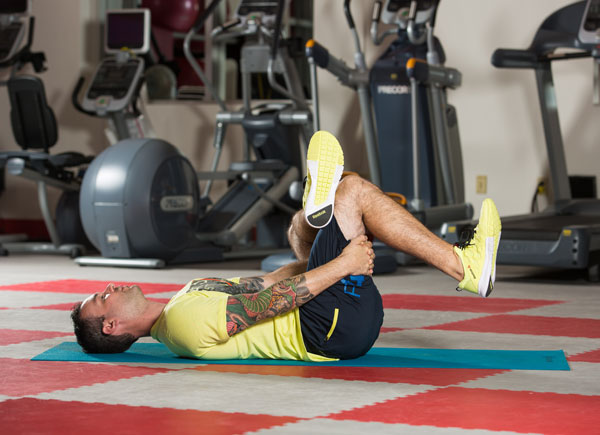
external rotator stretch
Flexibility training, like resistance training, is joint specific, meaning there’s not one specific exercise or stretch to do to improve your overall flexibility. Instead, incorporate a variety of different movements and stretching techniques into your training to target the major muscle tendon units of the neck, chest, shoulder girdle, trunk, lower back, hips, legs and ankles.
Do: Mix up your approach.
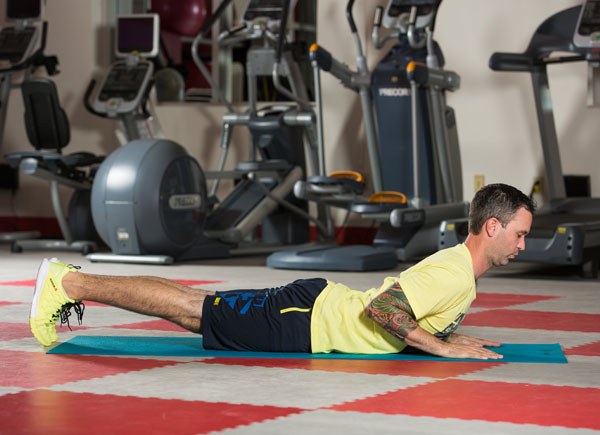
upward facing dog
From proprioceptive neuromuscular facilitation (PNF) with a partner to static stretching in mind-body modalities like yoga, mixing up your approach to flexibility will not only offer improvement in range of motion around the joints, it will also keep this component of your workout routine exciting and ultimately more enjoyable.
Don’t: Make it painful.
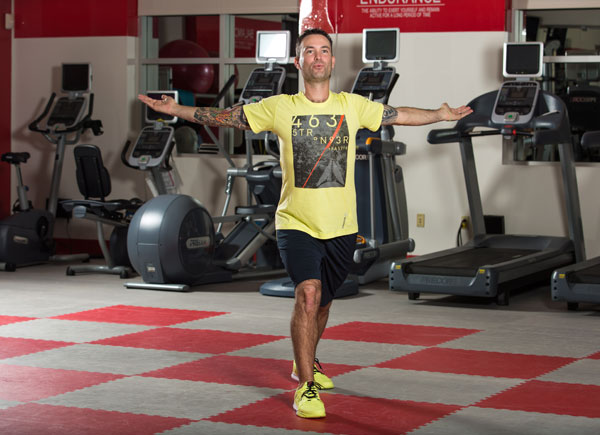
chest stretch
As is the case with any aspect of fitness, when it comes to flexibility training, you want to feel challenged. However, there’s a big difference between slight discomfort and extreme pain. When performing static stretching, make it a point to stretch only to the point of feeling mild tightness or slight discomfort to ensure the greatest level of safety and effectiveness.
Do: Make it a priority.
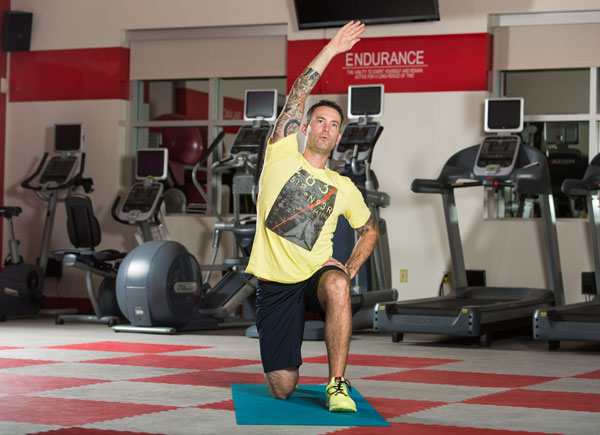
kneeling stretch
Studies have shown that while range of motion around a joint is improved immediately following flexibility exercises, chronic improvements are seen after three to four weeks of regularly stretching at least two to three times per week. For the greatest benefit, perform your flexibility training after your resistance-training workouts and stay committed in your approach to stretching regularly.
Don’t: Skimp on static stretching.
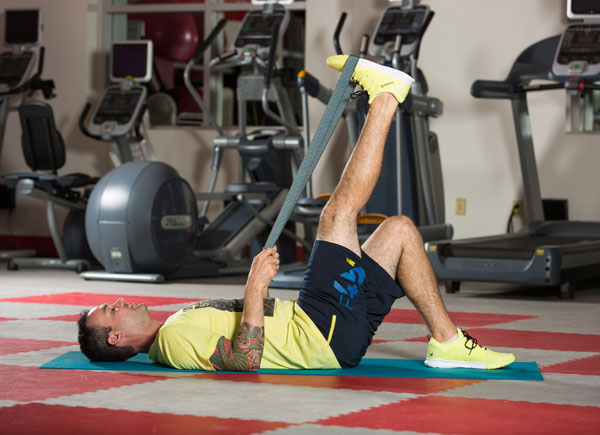
hamstring stretch
For best results, aim to hold each static stretch for 15 to 30 seconds and repeat each one two to four times, completing a total of 60 seconds per joint.

Source : Jessica Matthews, M.S., E-RYT / ACE 


Wednesday, 19 November 2014

What Is a Foam Roller, How Do I Use It, and Why Does It Hurt?


Self-myofascial release, also known as “foam
rolling,” has transformed from a once mysterious technique used only by professional athletes, coaches, and therapists to a familiar everyday practice for people at all levels of fitness. Recent information, technology, and affordable products have introduced an increasing array of training and recovery methods to the average person.


Self-myofascial release is a fancy term for self-massage to release muscle tightness or trigger points. This method can be performed with a foam roller, lacrosse ball, Theracane, or your own hands. By applying pressure to specific points on your body you are able to aid in the recovery of muscles and assist in returning them to normal function. Normal function means your muscles are elastic, healthy, and ready to perform at a moment’s notice.


Do I Have Tight Muscles or Trigger Points?

Trigger points are specific “knots” that form in muscles. They are unique and can be identified because they will refer pain. Pain referral, for our purposes, can most easily be described as the pain felt when pressure is applied to one area of the body, but the pain is felt or radiated in another area.

A common example of a trigger point is felt while foam rolling your iliotibial (IT) band as it causes pain to radiate up to the hip or all the way down the leg to the ankle. When rolling or working on tight/sore muscles you will experience discomfort or pain. Think of it like the pain you get while stretching. It should be uncomfortable, but not unbearable, and when you are done it should feel better.

Why Am I Doing Something That Hurts?

For many, deep tissue massage is easy to understand. Ideally someone is able to work out the knots in your muscles, and it is commonly known this process may be uncomfortable and at times painful. Self-myofascial release provides the user the ability to control the healing and recovery process by applying pressure in precise locations, because only you can feel exactly what is happening.

It is always recommended to consult with your physician or physical therapist for therapeutic/sharp pain and receive approval before starting self-myofascial release. For most people you will be cleared immediately and your doctor will encourage the practice.

Releasing trigger points helps to reestablish proper movement patterns and pain free movement, and ultimately, to enhance performance. Utilizing stretching alone is not always enough to release muscles tightness, which is why foam rollers have thrived on the mass market. Imagine a bungee cord with a knot tied into it and then envision stretching the cord. This creates tension, stretching the unknotted portion of the muscle and the attachment points. The knot, however, has remained unaltered.

Foam rolling can assist in breaking up these muscle knots, resuming normal blood flow and function. The goal to any corrective or recovery technique is to get you back to the point of normal functioning, as if nothing was ever wrong. When was the last time you trained like you were a teenager, going hard without a second thought, and injuries were something that only happened due to physical trauma like a 250lb linebacker hitting you?


 What Causes Trigger Points and Tight Muscles?

Both have the same contributing factors including training, flexibility, movement patterns, posture, nutrition, hydration, rest, stress, and other lifestyle factors. Our bodies learn to compensate for what we throw at them every day, but we can exceed our ability to recover via too many intense workouts, poor posture, and other lifestyle factors.

This is when you need assistance using recovery techniques or through seeing a professional. If you lived a perfect life with everything in balance, you would theoretically never have either of these conditions, however I’ve yet to meet that person.

How Does Self-Myofascial Release Work?

Deep compression helps to break up or relax tight muscles and adhesions formed between muscle layers and their surroundings. Imagine you are tenderizing your own muscles. They should be soft and supple like a baby’s muscles. However, if our muscles are not taken care of properly we can experience loss of flexibility, adhesions, and painful movement.

 The deep compression of self-myofascial release allows normal blood flow to return and the restoration of healthy tissue. The body naturally wants to be healthy and strong, but sometimes an extra boost is needed to achieve optimal muscle and tissue health.

 How Do I Know What to Foam Roll and How to Do It?

Areas to focus on can be identified in two different ways. The first is through screenings. If you have followed the last two articles - squat screening and hip hinge screening - and have had struggles with either movement, you should include foam rolling in your workout and recovery program. You may target specific areas/muscles that relate to the movements you are focusing on.

If after using the foam roller your movement improves, you have a more specific strategy to follow. Secondly, trigger points and tight muscles can be found through self-exploration, utilizing the list of techniques below and exploring each one.

To foam roll properly, apply moderate pressure to a specific muscle or muscle group using the roller and your bodyweight. You should roll slowly, no more than one inch per second. When you find areas that are tight or painful, pause for several seconds and relax as much as possible. You should slowly start to feel the muscle releasing, and after 5-30 seconds the discomfort or pain should lessen.

If an area is too painful to apply direct pressure, shift the roller and apply pressure on the surrounding area and gradually work to loosen the entire area. The goal is to restore healthy muscles - it is not a pain tolerance test. You may also use other objects to work on muscles such as a tennis ball, lacrosse ball, Theracane, or Trigger Point Therapy Kit.


  Never roll a joint or bone. Avoid rolling your lower back. To target these muscles I recommend using tennis or lacrosse balls. If you are having issues with your neck, refer these issues to an appropriate medical professional, as these areas they can be more sensitive and require more advanced attention.

 What Happens After Foam Rolling?

You may be sore the next day. It should feel as if your muscles have been worked/released, however you should not push yourself to the point of excessive soreness. Drink plenty of water, get enough sleep, and eat clean. This will help to flush your system and fuel your muscles more effectively. Give it 24-48 hours before focusing on the same area again.


Source:
Jeff Kuhland - Corrective Exercise and Outdoor Fitness