Showing posts with label heart disease. Show all posts

Thursday, 9 July 2015

Cardio Training Habits for Success

If you're new to the world of fitness, first and foremost never over do it, and always get cleared by a medical doctor if you think you may have health considerations


Cardio short for cardiovascular training by design is different from resistance training. The main focal point of cardio training is to increase the fat burning process. This is accomplished by burning fat as the main fuel source. Weight resistance training builds bigger muscles and uses glucose (usable carbohydrates) as the main fuel source. Although if cardio training is intense (not able to talk and exercise simultaneously) glucose instead of fat will be used as the energy substrate. This is due to the fact that fat doesn't burn fast enough to keep up with rapid movements.

Like I mentioned before if you're a newbie to exercise take it slow by walking in your neighbor 3 days a week for 20 min, for the first 2 weeks and progress up to 4-5 days a week for 45-60 min, at the end of the 3rd and 4th week. After that, you can try more intense versions of cardio including: treadmills, ellipticals, stationary bikes, jogging and cross trainers. 

 
Choose a level where talking with your exercise partner is still possible for 15 minutes, 3x week for 2 weeks. You can progress up to 45-60 min 3x week. A rudimentary way of determining intensity level for these cardio modalities is 55% to 65% of your maximum heart rate. You can estimate your maximum heart rate by subtracting your age from 220, then multiple that by either.55 or.65. 
This is a good range that will keep you in the fat burning mode and not burning glucose that you will need for your resistance training(glucose is the preferred fuel source during weight training).

Although the age predicted max heart rate is the most common method under use today it has one major flaw. Some 60 yr olds are in better shape that some 30 yr olds, but this method would fail to recognize such an important factor. I actually prefer using something called the Borg Scale to determine intensity which I outline a little later in this article. 

Advantages of cardio training: When your muscles need oxygen and nutrients it's your heart-lung complex (cardiovascular) that does the job. When your body has waste products that need to be expelled like carbon dioxide and metabolic wastes, your cardio system better be in tip top shape, or illness and disease might soon follow. The better shape you're in the more proficient your heart will be to pump blood to all the various organs. This translates into more energy for you throughout the day and a more rewarding and productive life. 


An out of shape person has his or her heart working overtime just to accomplish the minimal about of work required to maintain life. Now take that person and try to make them do something active beyond sitting on the couch. The heart will have a stressful time keeping up because it's all ready working hard. Shortness of breath, rapid heart beat, wheezing, loss of balance and fatigue are signs of a weak cardio system. 

The more cardio trained you are, the less your heart has to work. Who do you think has more energy a person with a resting heart rate of 80(how many times the heart beats in one minute) or a person with resting heart rate of 110 beats per minute? The person with the resting heart rate of 80 is more proficient in pumping blood throughout the body compared to the person who needs an extra 30 beats per minute to get the same amount of blood pumped throughout the body. 

A good method of determining of how hard you're working is something called the Borg Scale and my own preference of intensity feedback:

6, 7, 8 = very, very light
9, 10 = very light
11, 12 = fairly light
13, 14 = somewhat hard (correlates 55-65% age predicted max HR)
15, 16 = hard
17, 18 = very hard
19, 20 = very, very hard

You're your own master here, which is why I like using this scale. Begin with light sessions according to how you perceive your own exertion and work your way up until you can maintain 2 somewhat hard workouts for about 45-60 min, 2 x week along with another 2 light workout sessions alternating between the 2 for a total of 4 sessions a week. 
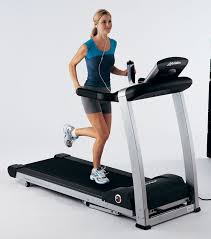
 
 Again, cardio training along with resistance training is essential to good health. It is also the cheapest and easiest way to exercise, just grab some running shoes and you're all set!

Damian@FitnHealthy

Saturday, 4 July 2015

Does Your Heart Rate Really Matter?


How would you feel if I told you that I would give you $100, give or take $200?
For years, this is not unlike what we’ve done with heart-rate training. Measuring exercise intensity using heart rate has suffered from two major problems:
  1. Using relatively inaccurate formulas to make specific exercise-intensity recommendations
  2. Attaching discrete, seemingly all-or-nothing objectives to various heart-rate ranges
The overreaction to these problems has taken the form of proposing that heart-rate training doesn’t matter when it comes to measuring exercise intensity, especially with the rise in popularity of high-intensity interval training, where the directive is a straightforward “go as hard as you can.”
Not everyone needs to use heart rate to measure intensity, as their goals may not be that specific or their starting health status may not be questionable enough to warrant needing a definitive intensity range to ensure safety when starting an exercise program. However, most people will benefit from having some accurate gauge of exercise intensity to help direct exercise efforts.

Age Ain’t Nothing But a Number…Until It Becomes a Bad Number

Using any formula that starts with age is problematic and introduces huge error ranges that are potentially as large as the training zones we are using. Any formula including any version of 220 – Age for maximum heart rate calculation is going to be a mess for the same reason that selling a single shoe size to everyone is going to be a problem. Not every 50-year-old has the same fitness level, and maximum heart rate is determined by more than just the number of years you have been alive.
Today, instead of having to rely on formulas, we have field tests that measure specific points where the physiological response to exercise intensity shifts. A recent study illustrates the unacceptable level of error when using a formula now that we have the field tests. The formulas get it right for some people, but get it wrong for enough people that if a better option is available, it should be the preferred choice.

Out With the Inaccurate, In With the…More Accurate

The field tests directly measure two critical heart-rate points for each individual. The first ventilatory threshold (VT1) occurs when intensity reaches the point where the fuel for activity is coming in equal parts from carbohydrate and fat. The second ventilatory threshold (VT2) occurs when the rate of accumulation of lactate in the muscles begins to exceed the ability of the circulatory system to recycle it.
Any time an individual works above resting heart rate, he or she is improving fitness (if deconditioned), and at least maintaining fitness (if already well-conditioned.) Beyond that, the two intensity shifts at VT1 and VT2 can help define more personalized training progressions because they are based on field tests of the individual’s response and not formulas. (Details of the field tests and expanded details surrounding VT1 and VT2 can be found in the ACE Personal Trainer Manual, 5th edition.)

Are You In the Zone?

Now for the second problem: Using heart ranges to define narrow training objectives like the “fat-burning zone,” or the “cardio training zone,” as if in one zone all you are doing is using fat exclusively and the other zone is the only place you find cardiovascular improvements.
Working above resting levels but below VT1 will improve fitness in deconditioned individuals and maintain it in those with an average baseline level of fitness. Working between VT1 and VT2 will maximize both caloric quality and caloric efficiency (explained in the next paragraph) in the interest of prioritizing a metabolic response during the exercise session. Working above VT2 will maximize increases in the ability to perform at a high level and prioritizes a metabolic response after the exercise session.
As many people now realize, the big problem with the fat-burning zone idea is that it emphasizes lower intensities because a higher proportion of the calories burned come from fat. But high-er doesn’t necessarily equal high. A large portion of a small number is still a small number. Working between VT1 and VT2 (which will be higher than the old fat-burning zones) maximizes caloric efficiency through intensity that is high enough to burn a relatively high number of calories, yet low enough to allow caloric quality, meaning a significant portion of calories come from fat. (Note: At VT1, the carb-fat mix for the fuel of activity is equal.) What does this mean? A significant amount of fat is burned during the exercise session and significant improvements in cardiovascular fitness are achieved.
Working above VT2 will generally result in shorter-duration workouts for those pursuing general fitness goals, as well as a higher portion of carbohydrates burned as the fuel source for exercise. However, at this intensity, the “after burn” effects begin to manifest and metabolism gets a slight boost while at rest, which is when the body shifts to using a higher portion of fat. Note that training above VT2 also requires a high degree of psychological commitment as well.

Surrounded by Fat-Burning Zones

As a result, both of these zones are really “fat-burning zones.” Between VT1 and VT2, you burn more fat during the exercise session. Above VT2, you burn more fat after the exercise session. Shortly after I first learned of these methods from an ACE exercise physiologist several years ago, I began using them with my clients and it enhanced my clients’ results by delivering more precise training-intensity recommendations, which yielded better results without an excessive investment of time for the clients.
Gone are the days where you need to know someone’s age to recommend heart-rate training intensities. This evolution of cardiovascular training intensity is a natural phenomenon in any field, as methods are altered as understanding grows.
 
Source Jonathan Ross | ACE