Showing posts with label 10 Things You Should Know About Stretching. Show all posts

Wednesday, 30 September 2015

How to Get Lean Muscle


how to get lean muscleThere are many ways to build lean muscle that will make you look toned and athletic. The key is to keep up with whichever method fits you best. Fitness is not something that happens in x-amount of days. Instead, fitness is a lifestyle that is lived through diet, exercise, mindfulness and activity.
“I’m too busy” is a common excuse when it comes to fitness. Investing an hour a day to fitness three to six times a week will give you more physical and mental health benefits than you can imagine. If you really break it down, what’s four hours a week to spend on exercise? When you look at devoting just four hours a week to exercise, it really doesn’t seem that intimidating.
For those with busy lives who don’t know where to start with their fitness, we offer a course that is specifically for those on the go. Not only does it help you to get fit with exercise, but it offers healthy diet options so you can start working toward that lean muscle.

Running

One of the best exercises for building lean muscle is running, and it’s one of the most affordable. All you need is proper shoes and clothing and you’re good to go. While it may not be the easiest at first, as long as you keep pushing and aiming for goals, running will become easy, rewarding and fun. And the more you keep with it, the more you will see your body change. That’s because running burns more calories than most types of cardio. If you have a gym membership, skip the bike, eliptical or stairstepper and hit the treadmill for 30 minutes. On average, you burn 100 calories per mile, which makes tracking calories easy. Running is an aerobic exercise, which is an exercise that burns fat, a key component in getting that lean muscle you want.

Diet

Diet is just as important as exercise when it comes to losing fat and gaining muscle. Lean protein is the key to building lean muscle. Switch your diet from carb-heavy to lean-protein heavy and you will start seeing the changes in your body that you are aiming for. That’s not to say take carbohydrates out of your diet altogether, as they are important for energy. It is protein that helps rebuild muscle, so if it’s muscle that you’re looking to build, there should be more servings of protein in your diet than carbohydrates. A popular diet that many athletes and fitness enthusiasts use to look their best is the paleo diet. The diet (based on that of the Paleolithic humans) focuses on eating fish, grass-fed meats, eggs, vegetables, fruit, fungi, roots and nuts. With this course, you will learn more about the diet, as well as how it will help you get rid of fat and gain muscle.

Weight Training

Many people think that weight training is an exercise that will make them bulk up. That is actually not true. You will not bulk up unless you add supplements and extra calories in the form of protein in your diet. As long as you keep with your balanced diet, you will see lean muscle start to emerge. Strength training actually makes your body work harder to maintain muscle over fat. This, in turn, helps to boost metabolism and burn more fat and calories throughout the day. As we age, we lose lean muscle and need to replace the muscle loss or else it will turn to fat. Weightlifting is a great way to replace the muscle loss and prevent fat. With this course, you will learn the importance of strength training, as well as the tools to gain muscle and lose fat.

Yoga

Until you try yoga, you have no idea what an entire-body experience it really is. Yoga helps bring all your work — whether it’s running, biking, weightlifting, swimming — together. There are many health benefits you get from practicing yoga on a regular basis. Yoga is not only good for your body, but it reduces stress and depression, as well as helps you to sleep better. When it comes to body benefits, practicing yoga will strengthen muscles to help aches and pains, tone your body to get that lean muscle you’re looking for, improve flexibility, increase endurance (which will help with your cardio exercises), help your posture and more. A good yoga session leaves you feeling relaxed and replenished. If you’re interested in beginning yoga, don’t be intimidated. Yoga is a practice where nobody is perfect. You can always set goals for yourself and get better with your practice. This course we offer is yoga for everyone, which introduces yoga to beginners. In it, you learn sitting, standing and lying practices, as well as the importance of meditation. If you’ve got the hang of yoga and want to dive into the practice further, we also offer this course, which has more than 30 hours of techniques.

 Putting It All In Practice

Once you start a routine of diverse exercises and healthy eating, you will start seeing changes in your body over time. Losing fat and building lean muscle is not something that happens immediately, so we recommend keeping a journal of your progress and taking a photo of yourself at the beginning of each month to see how far you’ve come. It’s important to remember that in order to keep your lean muscle you’ve worked hard for, you need to create a healthy and positive lifestyle for yourself. It takes effort, but once you start seeing the changes in your body and in your mental health, you’ll want to keep going forward. The confidence that you get from maintaining a healthy and fit lifestyle is something that is worth all that hard work.

Source

Thursday, 20 August 2015

Muscle Cramps: Unmasking the Fitness Dilemma

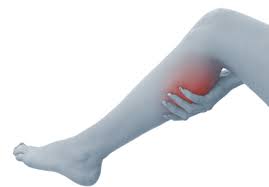
The article talks about the occurrence of muscle cramps among individuals who want stay fit and improve their health. Rather than taking medication and drugs to treat muscle cramps, individuals are advised to make adjustments in their training routine and diets to lessen the development of muscle cramps.
 
People nowadays are becoming more conscious about their health, recognizing the importance of exercise and physical activities in their lives. Many have been integrating exercises like jogging, skipping ropes, brisk walking, and other similar exercises in their daily routines. However, there are instances that people who exercise, especially those who run or jog, can be vulnerable to muscle cramps. Muscle cramps are the involuntary and forcible contraction of the muscles. These cramps can be related to a part of a muscle, the entire muscle, or a group of muscles. It may occur many times before it is relieved. Sometimes there can be simultaneous cramps that move body parts in opposite directions. Statistics show that about 95% of individuals experience muscle cramps at some point of their lives.

 Muscle cramps can be caused by different factors which may include poor flexibility, muscle fatigue, electrolyte and mineral depletion, excessive physical exertion, and dehydration. Electrolytes are minerals in the blood and other fluids that carry an energy charge. In addition to these causes, muscle cramps can be linked to some factors like improper breathing and unhealthy diets.

Muscle cramps may disappear on their own, but there are some things that can be done to lessen their severity and longevity. Below are some of the things that can be done to treat muscle cramps.

· Stop the activity that triggered the muscle cramp
· Gently stretch the affected muscle
· Keep the affected muscle moving with light activity (standing and walking around)
· Massage the affected area to aid blood flow

Making adjustments in one's training routine may help prevent the occurrence of muscle cramp. Improving one's cardiovascular fitness may also boost the flow of blood to the muscles. A strong heart may guarantee that there are sufficient amounts of oxygen and nutrients in the muscles for them to function properly. Stretching may also help the muscles become more loose and flexible that may stop the muscles from tightening and cramping. Stretching coupled with a good warm-up session may lead to increased range of movements and help prevent injuries and muscle cramps by prompting muscle recovery.
 
In terms of breathing and healthy diets, people who workout should make sure that plenty of water is taken before and while working out to replace lost electrolytes. Deep breaths should be done while working out to allow consumption of plenty of oxygen. Studies show that when oxygen intake is more efficient the following may take place: slower heart rate, decreased blood pressure, eased anxiety, and relaxed muscles. Workouts should not be overdone to prevent the occurrence of muscle cramps. Any cramping usually subside after a few minutes of rest but if individuals are having trouble with their cramps they should seek the advise of doctors of other health specialists.

Rather than seek for the treatments or remedies for muscle cramps engaging in proper pre-workout and workout routines may eliminate or lessen the occurrence of these health ailment. The use of over-the-counter medication to treat muscle cramps is not prohibited. But individuals who wish to try them should consult doctors before taking them and not self-medicate. Proper workouts and healthy diets prioritized rather than taking muscle relaxants and other medications to treat muscle cramps.


Damian@FitnHealthy

Friday, 31 July 2015

A Brief Guide To Exercise Stretching

The majority of us spend a large chunk of our day in a seated position. Think about it, you sleep for 7-8 hours and most of that may be in the foetal position, you get up maybe drive to work...in a seated position and then get behind a desk, when you get home you sit in front of the TV to unwind. Added to this if you do take some time out for exercise, can you honestly say that you finish your session with a good stretching routine? Just think of your poor bunched up muscles crying out for a BIG stretch!

I realise that I've just made a big generalisation but it hopefully helps you to understand where I'm coming from. There are many forms of stretching and much opinion of when it's better to stretch, before exercise, during, after or none at all! Some people think that we should stretch whether we exercise or not and others don't. So it can be confusing.
To keep it simple this advice is aimed at those who want to carry out a static stretching routine on its own and not before or after an exercise session. I don't intend to add any new theories to this debate but what I do want to do is to keep it clear and and concise, so read on!

Benefits of Stretching:

* Can improve your flexibility. 
* Helps you to relax. 
* Reduces the risk of joint sprain or muscle strain. 
* Can reduce the risk of back problems. 
* Can reduce post exercise muscle soreness. 
* Can reduce tension in the muscle.
Warming Up. Before starting your stretch routine I would recommend that you 'warm up' your muscles prior to doing so. Stretching is often mistakenly thought of as a sufficient way of warming up your muscles but its important realise that a gentle warm up prior to stretching is a safer option as your warm up routine will increase blood flow to your muscles and therefore reduce the chance of injury prior to stretching.

A gentle warm up should consist of light rotation of the joints such as the shoulders, hips, knees and ankles followed by gentle to brisk walking or walking/jogging on the spot. This should last approximately 5 minutes or so until you feel warm and slightly out of breath.
Types of Stretches. Stretches can be split into 5 different techniques: Static, Ballistic, Passive, Ballistic/Dynamic and Proprioceptive. If you are a beginner I would recommend the simplest and easiest technique to ease you gently into it which is the Static stretch where you stretch the muscle to a point where you feel the tension and holding the stretch for approximately 15-20 seconds.
Static stretching can improve your flexibility over time and is one of the safest forms of stretching. Good luck with your journey to improved flexibility!

Damian@FitnHealthy

Saturday, 11 July 2015

10 Things You Should Know About Stretching

10 Things You Should Know About Stretching

Before fitness training, one must give importance to doing warm-up or stretching exercises to prevent accidents or to enhance the output during the training.  
There are also a number of precautionary measures and tips to serve as guidelines when doing fitness exercises.  

Here are some of them.

1.  To increase your flexibility and to avoid injuries, stretch before and after workout.  Almost everyone knows that stretching before workout prevents injuries during the exercises, but only few people know that stretching after workout, when muscles are still warm, can increase flexibility.

2.  Hold your stretching position for more than 60 seconds to increase flexibility.  While holding your position for 20 seconds is enough for warm ups, holding each position for at least 60 seconds will develop the body's flexibility.

3.  Do not go into a stretching position then immediately return to the relaxed position, and do it repeatedly.  This is more appropriately termed as bouncing while in a position.  When stretching, hold that position for several seconds, and then slowly relax. 

4.  Work slowly in increments instead of immediately proceeding to doing the hardest exercise or position.

5.  Make sure that you have stretched or warmed up all muscle groups.  For some people, even if they have strong bodies, they tend to neglect the neck when working out of stretching.  Stretching the neck muscles can be as simple as placing the palm of one's hand against the front of the head and pushing it.  Then, do the same to the sides and the back of the head.
 

6.  Stretch regularly to continually increase your range of movements and your level of flexibility and strength.

7.  Workout considering only your capabilities and not of others.  Do not force yourself to do exercises that you are not yet capable of just because there are people who can do it.  Increase your limits slowly.  Listen to your body. There are days when your body may be too tired that you may have to consider reducing your range of motion.

8.  Learn to rest. Rest in between sets and stations to make sure that the body has enough time to recover its energy.  Also, it is advisable that you don't work the same muscle groups consecutively for two days. The muscles grow during the period when you rest and not when you are working out.

9.  Do aerobic exercises to strengthen your heart.  Aerobic exercises are those physical activities that much oxygen for fuel. This includes cardiovascular exercises such as skipping rope, running or swimming.

10.  Music may help you when you want to train for longer periods or to increase your intensity.  You can use mp3 players,  lightweight ipod etc for this.  Just make sure that you brought your headset with you so you wouldn't disturb people who don't prefer music while exercising.

Apart from preventing injuries and increasing one's limit, it is also said that stretching is good for a tired body and also for a stressed mind and spirit.

You may do this exercise repeatedly this way.  Bouncing or forcing yourself into a position during stretching can strain or damage some joints or muscles.