Showing posts with label fitness pro. Show all posts

Wednesday, 17 June 2015

Health And Nutrition - Fitting Fitness Into Your Busy Day

When it comes to health and fitness training time is always an issue. Some of us are busy, some of us are very busy, and some of us are so busy we don't even know which way is up. 

Sound familiar? If you are the kind of person who is on the go the minute the alarm rings in the morning to the minute your head hits the pillow at night this article is for you. 

If you have kids who eat up all your time and you dream of a little time to yourself, this article is for you. If you want desperately to get fit but other commitments are making it next to impossible this article is for you.
 
Here's the good news, getting fit doesn't take that much time. You need to address two areas in your life; exercise and diet. In fact, if you are stuck for time to workout, the diet portion is going to have more of a drastic effect on your fitness. Think about it, if you don't have time to burn the calories then you need to cut them from your diet. 

Wait a minute! You are probably thinking to yourself that food is one of the only sources of pleasure in your busy day. I agree with you, it should be. Eating well better darn well also be delicious. If it isn't then you are doomed to fail your diet. So understand what I am saying, you will eat well but you must also enjoy your food. I am not talking about a radical starvation diet or diet extremes where you avoid carbs or fats at all costs. 

Your Nutrition should be well-balanced.
Here are a few golden rules :

1. Drink 2 to 3 litres of water a day
2. Avoid processed foods
3. Avoid foods with refined sugar

Here's a last tip, if you are the type who eats a lot of fast food because you are so busy, just make better choices. Order water instead of pop with your meal. Have a salad instead of fries with your burger or sandwich. Have honey instead of sugar in your coffee. All these small choices made day after day will add up in the long run. Think about it, maybe you have been putting on 5 to 10 pounds a year for a few years. Not a lot of weight over the course of a year. This slow addition of fat has been because of all these small choices. 
So you don't have to make big changes to reverse this weight gain.
As for a fitness routine do one set of the following as you roll out of bed in the morning and just before you go to bed at night:

1. Push ups
2. Lunges (Take a long stride of a stance and do 1 set each for side)
3. Crunches (Remember to hold your hands by your ears, not inter-laced behind your head ‚¬€ don't pull on your neck while you do these)

4. IF YOU ARE FEELING AMBITIOUS ‚Chin ups ( you can get a chin up bar that installs in a door frame for around $20 from most sports stores)

If you follow a simple fitness routine like the one outlined above you will definitely get strong. This will result in a sleek and shapely physique. As you lose weight and shed fat you will reveal this new toned body. 

Fitness workout programs don't have to be a one or two hour ordeal. It can be and short and sweet if that is all you have time to do. What is important is that you do something to keep your body strong and performing well. One day at some point in the future you just may have more free time to join a gym or a running club or whatever you like to do. 

When that day comes you will be ready for it because this little fitness exercise plan and simple diet has kept you fit.

Don't put it off. It doesn't take much effort. Make a change in your life starting today.

Source : Niall Traynor |GO 

Sunday, 14 June 2015

The Reasons To Get Into Rock Climbing

The FitnHealthy crew love Rock Climbing as a great mind and physical exercise .. most readers are
probably aware of rock climbing and might wonder why it has gained in popularity to the point that you have rock climbing walls on cruise ships! Well, there are a number of reasons. 

Perhaps the first reason climbing is picking up in popularity is the simple fact it is outside. You can usually find somewhere to climb that is relatively near to your home. While climbing, you are out in the fresh air and away from the things that annoy all of us like cell phones, and the like. 

The second reason many get into rock climbing is the exercise factor. If you are like me, you get bored quickly if you are just doing reps or plodding along on a treadmill or some similar exercise equipment. This is why so many home exercise machines turn into expensive clothes hangers. With rock climbing, boredom is not a problem. Even the biggest cynic gets a rush from being up in the air on a vertical face. 

While these are all good reasons for climbing, you can find them by doing other things as well. There has to be something else that makes rock climbing so addictive and special. There is. It is a personal challenge. 

Whether you realize it or not, you crave personal challenges. The problem these days is finding something that is truly personal. With rock climbing, this is not a problem. It is you and whatever you are climbing. You either pull it off or you don't. This makes it a purely personal sport that you, and you alone, can succeed at or give up. There is something about that which gets most people going.
This certainly isn't intended to suggest that rock climbing has to be a solitary sport. Usually, you have at least one other person with you. 

 More and more people, however, are pursuing it as a family outing. With rock climbing gyms popping up everywhere, it is even growing a social side where like minded people can meet. 

Rock climbing is a great sport, but it is often hard to explain to a non-climber why it so great. If you are considering it at all, I strongly encourage you to have a go at it. 
 
You might just find that weekend activity you've been searching for your entire life. Just realize that you probably won't restrict it to just the weekends!
 
 Damian@ufitnhealthy

Friday, 1 May 2015

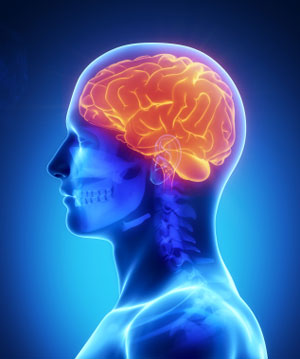
Keep Your Brain Buff

Exercise and the BrainMost people know that exercise is good for the brain, but to know why that's important you need answers to two critical questions: 
  • What makes the brain succumb to diseases like Alzheimer’s and Parkinson’s?
  • What is the best type of exercise to maximize the brain benefits?
Major degenerative diseases in the brain are all caused by one thing – mitochondrial decay in the brain.  Scientists classify degenerative brain diseases differently based on their symptoms and which region of the brain region they affect, but they all have the same cause.  Why is this a good thing?  Because it means that what‘s good for preventing one disease is also good for preventing others.  And because the primary factors for determining your susceptibility to brain disease is not genetics.
Mitochondrial decay causes brain disease, and which one you get depends on where you experience decay.  If it dominates in the hippocampus, you get Alzheimer’s.  If it dominates in the substantia nigra, you get Parkinson’s. 
And surprisingly, genetics is not your biggest determining factor.  Even if you have a defective gene, something in the environment has to activate it.  Michael J. Fox’s Parkinson’s was considered genetic until three other people who worked at the same Canadian TV studio in the 1970s also developed it. 
Brain Damage
Your brain uses 20% of the calories you consume.  As a result, it has a large number of mitochondria and experiences a by-product of energy production called free-radical production.  Free-radical injury to the mitochondria progressively reduces its ability make ATP.
The worst damage to proteins occurs at the inner membrane of the mitochondrion.  In harnessing the light (all food is essentially light turned into edible form) to give us energy, the mitochondria inevitability suffer damage by free radicals.
These are the four main processes of mitochondrial decay:
  • Decline in energy supply, mostly from free-radical damage to the mitochondrial membrane
  • Cumulative free-radical damage to lipids and proteins inside the cell, which turns them rancid
  • Chronic inflammation in the brain, caused by free-radical driven overexpression of the inflammatory cascade
  • Free-radical damage to mitochondrial DNA, which destroys bits of genetic code
What Can You Do About It?
Protecting your mitochondria is your best chance at preventing brain decay. Here are three main methods you can use:
  • Take mitochondrial antioxidants
  • Eat aromatic spices
  • Manage chronic inflammation
To prevent oxidative stress to mitochondria, which has been associated with Alzheimer’s and several other diseases, look into mitochondrial antioxidants. Lipoic acid, glutathione, acetyl-carnitine, CDP choline, green tea and Vitamins A, C and E can protect your brain. The list of all mitochondrial antioxidants is too extensive to list completely.
Aromatic spices such as turmeric, cinnamon, ginger, cloves and red pepper (cayenne) are all strong anti-inflammatories.  And of course, managing stress plays a large role in managing inflammation.  Most modern stressors don’t require a physical response.  Instead of fight-or-flight, it’s stew-and-chew.  We stress over our retirement, our kids’ schooling, our careers, traffic – none of which requires a physical response.  But the brain doesn’t know this – it interprets stress as a fight-or-flight event, so we often end up eating more when stressed. The downside of that is stress hormones that get pumped out never get used up by physical activity – that’s where exercise comes in!
Keeping your brain buff doesn’t just mean exercising; it means participating in the right type of exercise, which means more than just walking.  Physical activity boosts a protein (BDNF or brain-derived neurotrophic factor) that protects neurons from damage.  If we have enough BDNF flowing around our brains, we can handle any amount of stress.
Greenough worked on an experiment in which running rats were compared to others that were taught complex motor skills, such as walking across balance beams, unstable objects, and elastic rope ladders.  After two weeks of training, the acrobatic rats had a 35% increase of BDNF in the cerebellum, whereas running rats had none. 
The point is that your workout regimen has to include skill acquisition and aerobic exercise.
Essentially, exercise has to stimulate the senses, engage you and perhaps be a little bit “scary.”  Use simple math problems during exercises (even goes left, odd goes right, etc.), bounce a tennis ball around or kick a pebble back and forth while going for a walk, use random patterns with medicine ball tosses – the ideas are limitless.  Insert some skill acquisition and cognitive processing into exercise and you’ll greatly enhance the brain benefits, and get the brain one step closer to buff!

Source Johnathan Ross /Ace
 

Friday, 17 April 2015

Developing A Workout Routine

If you are focusing on improving your health by losing weight and getting fit, one healthy habit you should not overlook (aside from improving your nutrition) is developing a workout routine.
Naturally this can be a bit awkward especially when starting out for the first couple months. It takes a considerable amount of effort to remove yourself from the couch or bed and get that body moving again. For many, it will be a slow process as your legs, arms, and body get used to exercising.
However once you make it past that initial stage and are able to exercise for 30 minutes to an hour, you've crossed the first and most difficult hurdle. Now the fun can really begin!
The Importance of Developing A Workout Routine

 
  The next item of business is figuring out exactly which activities you want to continue doing on a weekly basis which is why developing a workout routine can really help.
One important point to remember in regards to exercise is that you don't want feelings of boredom to creep in. These thoughts can fester leading you to slowly give up this healthy habit and that's the last thing you want to happen.

This can be compared to the types of foods you eat. It would become extremely boring to eat the same meal each and every day. Who would want to eat in this manner unless you absolutely had no other option?
You should consider exercise in the same way. Doing the same workout day after day may be fine for a couple of months but eventually you may get bored with this routine. Granted this is not true for everyone, and if you are able to run the same course 4-5 times per week month after month, then by all means stick with that.

However for those of you who like change and want to have a diversified portfolio of workouts, then creating a workout routine can really help keep you motivated and focused.
Naturally before you can create a workout routine, you need to not only have some options, but also the abilities to do the activities safely and properly. That's not to say you can't try out something new like a sport or activity you've always wanted to learn. If that's the case just be sure you get someone who is qualified to teach you how to do the activity properly.

Personally, my workout routine has grown immensely over the past two years. When I first started exercising, the only activity I did was walking - four times a week for about an hour at a time.
Sure that doesn't sound all too exciting, but my 300 pound self at the time could only handle that amount of activity safely.

After a couple of months, walking turned into hiking, then a couple of months later into jogging. Once I was able to run for an hour without feeling completely drained afterwards, I knew I had developed a newfound endurance and energy level I had not enjoyed in over a decade.
Over the past year I have experimented with a number of different activities. I started playing tennis again, attending a local Bootcamp class, biking with my dog, snowboarding regularly during the winter, a gym membership to my local LA Fitness, and even did the Insanity at-home workout program to see what that was like.
 
  These days I have a consistent workout routine that I usually stick with week after week. Monday and Wednesday is Bootcamp class, Tuesday and Thursday is tennis, and I usually either run or bike my dog on Friday and on one of the weekend days.

Maintaining this diverse workout routine keeps me motivated to stick with my plan every week. Best yet, I never go more than two days in a row without some type of exercise.
If you have had issues sticking with a consistent fitness routine, developing a workout routine so you can regularly exercise which will not only get you into better shape but you'll lose weight too! The best of both worlds.

Source Gregory L. Gomez

Monday, 15 December 2014

Apple's iWatch and HealthKit: What They Mean for Health and Fitness Pros and Their Clients

The fusion of technology and the fitness industry continues at warp speed. This brings both excitement and concern, with users around the world waiting for the release of the new iPhone 6, new iOS 8 and the closely guarded Apple iWatch. Rumors suggest the devices will be both fashionable and practical.
Wall Street has also been watching the buzz around the new Apple products, as this is the most significant event for Apple under the leadership of Tim Cook (and not Steve Jobs). With the introduction of HealthKit, it is also Apple’s attempt to make the iPhone not only the center of the user’s digital world, but also of his or her physical world as well.
The HealthKit framework within iOS 8 will offer more health and fitness functionality by linking devices with a user’s health information, using the iPhone as the central hub. Now users will be able to capture and monitor health and fitness information such as pulse, steps, blood pressure and sleep habits. These health measures offer a clear and current overview of a person’s overall well-being. While it is true that individual apps have been doing this for years, the new HealthKit will allow these health and fitness apps to sync data about the user’s health and fitness across a variety of wearables and apps, organizing them all into one dashboard application—the iPhone.
Within the fitness industry, excitement started a year ago when Apple hired fitness-industry expert and ACE Pro Jay Blahnik as one of the first of many hires specific to health and fitness. After years spent consulting with Gatorade, Nautilus, Schwinn and Nike, Blahnik was all in with Apple. In December 2013, Apple met with the Food and Drug Administration, the U.S. governing arm of the federal government for all things medical, to discuss mobile medical applications, likely to ensure that HealthKit would not cross a regulatory line.
This is exciting news for our industry, so how can personal trainers and health coaches benefit from such technology? Here are three things I will be watching for in the weeks and months that follow the announcement:
Being Connected. Our world continues to become even more connected. It is through being connected that trainers and health coaches can engage with their clients, keeping them on the path to wellness. Through the new iPhone platform, clients will be able to share with you integrated insights into their daily lives (activity, sleep, steps, food, pulse rate, etc.) that wasn’t previously possible. No longer will you need to guess what your clients did outside of training or if they took your advice—it will all be there with a click of a button. How’s that for accountability? New business models for training and coaching will be developed to take advantage of this technology and the job of a trainer or coach will no longer be limited to inside the four physical walls of a gym, opening up new markets not only down the street but around the world.
Deeper Collaboration. We’ve seen that it takes a team to make a real difference in the lives of our clients. From trainer to physician, coach to nutritionist, the power of collaboration, being in sync and in real time, is one highlight of the new HealthKit. It will take time for each team member to understand his or her place in the overall HealthKit matrix, but what is exciting is the possibility of overall health for our collective clients. More teamwork between practitioners allows trainers and coaches to stay within their scope of practice and seek partnerships with others in the healthcare industry.
Proceed with Caution. Apple is late to the game with regards to fitness tracking, but many expect it to succeed where others have not. While Jawbone and FitBit do a good job of tracking activity, many consumers still see wearables as “unstylish” and the buzz of the wearable soon wears off with a sharp decline in use after just six months. A device has yet to emerge with enough authority to encourage mass adoption (not good if you are relying on this data). Apple could change that perception with their historic strengths in design and new hires in fashion, which means more people will be more inclined to wear a device and thus more health data will be collected.
As we share more personal and confidential information across the cloud, there will be more debate surrounding security and privacy with this type of information. Apple has taken steps to ensure our privacy, with requirements that apps using HealthKit not store information on the cloud and not share information without user consent. Of course, there will always be a risk when sharing data through the cloud, but does the benefit of sharing outweigh the concern over privacy? Or vice versa?
Remember, Apple is not the only kid on the block using smartphones for health. In the US, there are nearly 170 million cellphone users, 70 percent of whom use smartphones. Within the smartphone category, the iPhone is by far the most popular, with 42 percent of users, followed by Samsung at 28 percent, 7 percent for LG, 6 percent Motorola and 5 percent for HTC. However, when looking at the operating systems of these smartphones, Android takes the lead with 52 percent, Apple at 42 percent, and Microsoft, BlackBerry and others making up the remaining 8 percent (ComScore, 2014). The takeaway? If you only work with Apple, you will be missing out on 58 percent of the population that uses a smartphone other than an iPhone.
I am a believer in effective uses of technology and am excited about the Apple announcement, as well as the upcoming announcements from Microsoft and Google within the health and fitness space. New technologies and innovations like the iPhone, the Apple iWatch and HealthKit are not a magic bullet, but they can be a very powerful tool that, when properly implemented into trainers’ and coaches’ businesses, can lead to new clients, new revenue streams and new partnerships. These technologies will never replace a qualified and certified personal trainer or health coach. After all, clients hire us for our knowledge and accountability, but they keep us for our personality and ability to connect with them.

Source : By Ted Vickey Ted Vickey Ted Vickey, M.S., is the Senior Consultant - Fitness Technology for ACE. He’s been an ACE Certified Personal Trainer since 1992