Showing posts with label posture. Show all posts

Friday, 18 December 2015

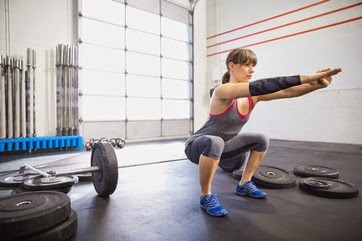
Perfect Your Form

Do a better squat, perform a better lunge, and fix your flawed technique

Lunges

What You Do Wrong:
You lean forward, causing your front heel to rise.

1/ "Narrow your starting stance," says Gray Cook, author of Athletic Body in Balance. The closer your feet are, the harder your core has to work to stabilize your body.

2/ "As you do the lunge, focus on moving your torso only up and down, not pushing it forward," says Craig Rasmussen, a fitness coach at Results Fitness in Santa Clarita, California. This keeps your weight balanced evenly through your front foot, allowing you to press into the floor with your heel, which tones more lower-body muscle.

Squats

What You Do Wrong:
You start the movement by bending your knees.

1/ As you squat, imagine you're sitting down into a chair, rather than forward on top of your knees. Push your hips back first instead of beginning by bending your knees, which puts more stress on your joints, says Dan John, a strength coach in Burlingame, California.

2/ Women tend to lean forward on their toes, but they should sit back into their heels. Try this fix: Pretend that you're standing on a paper towel, says Charlie Weingroff, lead physical therapist for the U.S. Marine Corps Special Operations Command at Camp Lejeune, North Carolina. "Then imagine trying to rip the towel apart by pressing your feet onto the floor and outward." This activates your glutes, which helps you use heavier weights and break through plateaus.

Straight-Leg Deadlifts

What You Do Wrong:
You round your lower back as you bend over.

1/ "When bending down, act as if you are holding a tray of drinks and need to close the door behind you with your backside," says Alwyn Cosgrove, co-owner of Results Fitness. This helps you push your hips back instead of rounding your lower back—a form blunder that puts you at risk for back problems.

2/ It's easy to put too much space between the weight and your body as you move up and down. Pretend you're shaving your legs with the bar or dumbbells, suggests Kaitlyn Weiss, a certified strength and conditioning specialist in Southern California. The farther the weights are from your body, the more strain on your back, which limits the work of your hamstrings and glutes.

Rows and Pullups

What You Do Wrong:
You ignore the muscles that draw back your shoulder blades.

1/ "Before you start the exercise, create as much space as you can between your ears and shoulders," says Rasmussen. Pull your shoulder blades down and back, which will ensure you work the intended middle- and upper-back muscles.

2/ "As you row the weights, stick out your chest," says Mike Boyle, owner of Mike Boyle Strength and Conditioning in Woburn, Massachusetts. This allows you to better retract your shoulder blades, which will lead to better results.

3/ "Imagine an orange between your shoulder blades," says Nick Grantham, owner of Smart Fitness in the U.K. "As you pull the weights or your body up, 'squeeze the juice out of it' by bringing your shoulder blades together."

Source

Tuesday, 8 December 2015

The Advantages, Disadvantages, and Exercises on a Fitness Ball

The Advantages, Disadvantages, and Exercises on a Fitness Ball

Most people dream of getting into shape, losing weight, and exercising more. It can mean signing up at local gyms. However, many fitness enthusiasts prefer to purchase home fitness equipment that can be effective for them. They can take the benefits of a total workout while at homes and within flexible times. 

One of the best options to consider is buying a fitness ball. It is the time for you to experience a unique workout at home. There are various reasons why this equipment has become very popular. In fact, it is utilized by most physical therapists to treat their patients from back pains.

 
A fitness ball having a diameter of about 55 to 85 centimeter is made of elastic rubber. It is utilized in exercise and physical therapy. There are various names for a fitness ball such as exercise ball, Pilate's ball, gym ball, therapy ball, balance ball, body ball, yoga ball, sports ball, and Swiss ball.

The major benefit of a fitness ball exercise is enabling the body to respond to the ball's instability while keeping the balance and engaging more muscles as well. Keep in mind that the muscles are strengthened upon struggling to maintain the balance. The core muscles of the body, back muscles, and abdominal muscles are the target of the fitness ball programs of exercises.

Exercises done on a fitness ball will never bore you. In fact it can challenge your stamina, patience, perseverance and, self-discipline. This is the true form of exercising, working the entire core muscles to achieve the best results.

A fitness ball is effective because of its rounded shape. It can create instability to induce your core body muscles to work. Compared to floor crunching, the muscles that are only working are the upper abs, but when you do the crunching on a fitness ball, the core muscles including abs muscles, back muscles, pelvic muscles, and hip muscles are working together in helping you stay on the ball.

Try doing a few pushups using a fitness ball, your hands on the floor and your feet on the fitness ball or vice versa. This exercise gives more stability when the feet are spread apart and tougher when the feet are put closely together.


 Although a fitness ball provides many advantages, there are also some pitfalls especially if overused. Strength coaches revealed that it can cause injury and approximately 70 percent of fitness ball exercises are considered worthless.  Nevertheless, it is still prescribed by some therapists in treating patients with back pain.

Incorporating a fitness ball in your fitness program can mean surpassing all the difficult levels involved during the exercise. Each requires support from your stomach muscles and back to help in keeping the trunk muscles firm. More often, a fitness ball is good for people who have lower back pain. Other uses include developing overall strength and control of the body's core muscles, increasing the strength of back and abdominal muscles, learning proper posture and body mechanics when lifting objects, and increasing mobility of the lower back.

Damian@FitnHealthy

Tuesday, 4 August 2015

Flat Resistance Bands vs. Resistance Tubes ?

I have only ever used resistance tubes, so I was surprised to discover that there were flat versions as well, and not just flat but wide as well as narrow ones. This piqued my curiosity and I decided to investigate the subject. This article is the result of my research. 
 
   As a general rule, both types of band have pretty much the same function and are used for essentially the same things: They are both used to perform resistance and flexibility exercises in fitness and rehabilitative contexts, as they have been since the early 20th century. That being said, there are differences between the two, which are discussed in some detail below:

Flat Resistance Bands

Flat Resistance Bands range from about 1€ to more than 5 €wide and come strips of latex ranging from a few inches in length to over 5 feet long depending on the brand and the system. The wider bands are highly malleable, especially thinner, lighter ones. They come in closed loops or open strips of latex and are frequently the band of choice for Pilates exercises and for therapeutic applications, although they are not the only type of band used in those contexts. At the other end of the spectrum some manufacturers offer narrow flat band systems such as the 4€ wide looped bands offered by RTB, or the open ended 1€ wide and 6€ long flat band system by Dura-Band (99.99% latex-free), which is manufactured using a layering process.

Some users prefer the greater comfort and stability flat bands. Wide bands especially wrap more easily and more comfortably around the torso, limbs and feet when the body is being used as an anchor. Although handles may be available as accessories for these wider bands they are not necessary in many cases because they compress easily in the hand for a good grip with minimal slippage. This makes them uncomplicated to use and easy to store or transport.

Narrower bands fall s somewhere in between when it comes to comfort.. The narrower and thicker they are, the more they resemble tubes in this respect, however, all flat bands offer some degree of stability over their cylindrical counterparts: They don't roll and they tend to €grab€ on to surfaces better. 

Tubes:

Different Resistance Tubes are made using varying qualities of latex and manufacturing processes. It is important to consider the manufacturing process because cheaper tubes are not only made from inferior latex products but they are extruded in a single layer, making them less resistant than their high-quality counterparts. In addition the quality of the accessories and attachment mechanisms is generally commensurate with the quality of the band: a cheaper band usually means cheaper, more fragile components. Proponents of flat bands cite these weaknesses as further arguments against the use of tube bands, and with reason. The argument, however, is less convincing with high-end tubes.

The best quality tubes are made using a continuous dipping technology that deposits liquid latex in layers, each bonding to the next and creating a super strong and tear and puncture resistant tube. All tubes are hollow but the multi-layered versions have extremely thick walls layered in concentric circles around a hollow center of narrow diameter. Brands that offer multi-layered solutions include Elastitone, Bodylastics and Lifeline.

Anti-snap technology such as external sleeves (Elastitone) or woven chords at the center of the tubes (like Bodylastics' DGS technology) add another layer of safety, comfort and durability to the best tubes. At this level the argument that flat bands are superior because they are made of a solid, not hollow, material is rendered somewhat moot. Latex or other elastic material, if stretched beyond reason will snap eventually. The point is that no band, flat or tubular, should ever break with proper use and care. 


Depending on your personal strength and your intended use of the product you may do just fine with an extruded, single-layer product but in that case make sure you do your research and don't go for the cheapest option.

Like flat bands, tubes come in open-ended and looped but the systems are more mixed and matched and there are other options which I have not seen with bands:

Common types of resistance tubes:
Linear
Closed Loops
Figure-8
X-shaped Linear
Specialty Tubes padded for specific use ( ex: such as the c-band loop by Lifeline which comes with cushioned grips and a door attachment and works, according to lifeline, in all three planes of motion and can be used by individuals or in team based exercises )

Resistance Levels:

Although there is no standard color coding system both types of band ( flat or tubular) are generally color coded according to resistance level. The color code might be stated in relative terms (light, medium, heavy, extra heavy etc.) but good bands also come with corresponding weight equivalents. Keep in mind that that not all weight equivalents were created equal. If you really want to get a sense of a free-weight equivalent you might be disappointed. The problem is that manufacturers don't necessarily employ the same methods. That being said, good brands make take pains to provide accurate equivalents and provide information about how they arrived at their results. You will need to compare methods and decide for yourself ( these usually involve measuring resistance at some point of extension).

Accessories:

As a general rule there are more accessories for tubular bands. This probably stems from the fact that tubes can really be uncomfortable to use without some basic accessories like handles and padding. From there, additional more specialized accessories would have developed naturally. Moreover, it is also no doubt easier to attach accessories to narrower tubes than wide bands. These arguments are borne out by the fact that among flat bands it is the narrow systems, which share both some of the concerns and advantages of their tubular cousins, that seem to offer more comprehensive accessory lines. These can usually be purchased after the fact or as part of special kits put together by the manufacturer. Kits include a selection of bands and some accessories. The more comprehensive the kit the more expensive it is. There are beginner to advanced kits and sometimes sports-specific or other specialized packages are also available.

Accessories might include: handles; padding; wrist and ankle cuffs; waist, door, sports-specific and/or other attachments.

Some tubes like the Bodylastics system come with built in clips for quick changes between exercises. Another advantage with this high quality system is that several tubes can be attached in different combinations to achieve different levels of resistance. The new Dura-Band system made up of flat narrow bands also uses an innovative clip system and offers a number of accessories (for those with allergy concerns, this band has the advantage of also being virtually latex-free).

Latex-Free:

Latex sensitivity is a dangerous often life-threatening allergy for many people. Latex free tubing is available from some manufacturers but by and large your options are pretty limited. You may find more options with Flat Resistance Bands. Although I have not used it myself the Dura-Band system may be an excellent alternative as it shares many qualities with both flat bands and tubes and claims to be 99.998% latex free.

My own conclusion in the final analysis is that choosing between flat bands or tubes is a matter of personal preference. If you are looking for a super light weight uncomplicated comfortable solution to supplement your fitness routine, Pilates training or add some variety to your weight training, you might choose the wide flat bands ( ex: Thera-Band, Ailyo, etc). If you want a comprehensive, stand-alone system, to engage in sports-specific exercises, or you simply like to work with as many options as possible 
 
Damian@FitnHealthy

Saturday, 6 June 2015

Tried Floatation Therapy ?

When it comes to getting away from the sea of troubles most of us face in modern life there is nothing quite like floatation therapy to make us feel buoyant again. Floating on water feels so simple, elemental, supportive and comforting - something we can probably link to our beginnings in the cosseting warmth of the womb.
Today we are spoilt for choice when it comes to floatation therapies, with many spas offering some sort of treatment, from small hydro baths right up to large pools. There are of course even floatation tanks for the home, not to mention the biggest tank of all - the sea. All we have to do is lie back and think of...nothing.
 
  
Beginnings
The origins of floatation dates back to 1954 when Dr John C Lilly, a medical practitioner and neuro-psychiatrist, began research into the origin of consciousness and its relation to the brain. He tried many experiments with different kinds of float tanks in a bid to create a device that would deprive or restrict the number of external stimuli so that the brain and the individual could be tested in an atmosphere of isolation. Initially these devices were called Sensory Deprivation Chambers but in recent years this has been changed to Restricted Environmental Stimuli Therapy
The philosophy behind floatation therapy is to provide people with a way of improving physical, emotional or psychological health. Central to this is a need for deep relaxation, which has been validated by recent research showing that up to 80 - 90 per cent of people visiting a GP do so because of a psychosomatic or stress-related disorder.

How it works
The advantage of floatation therapy is that it enables most individuals to experience very deep levels of relaxation without needing to learn any special technique. The deep relaxation that occurs in floatation slows down bodily functions, heart rate and brain activity, allowing the conscious and analytical part of the mind to enter a state of deep rest and to be bypassed. It does this through the absence of stimuli such as light, visual images, noise, gravity and touch. Floatation also stimulates levels of the natural painkiller and endorphin, encephalon, which encourages a sense of well-being and euphoria. According to Dr Lilly 40 minutes of floatation is equivalent to an incredible eight hours of sleep.

It is also worth bearing in mind that short of becoming an astronaut and blasting into space, floatation is the only time our body weight becomes free from the effects of gravity - literally taking a load of our mind! 
 
 Forty minutes of floatation is the equivalent of eight hours of sleep

Benefits
With such a powerful form of relaxation it is no surprise that floatation provides the following therapeutic benefits:

Mind
Floatation is an excellent way of relieving stress (plus associated digestive tract conditions such as Irritable Bowel Syndrome and ulcers), depression and anxiety, as well as promoting healthy sleep. It is also believed that floatation stimulates and synchronises the left and right hemispheres of the brain, enhancing concentration, mental clarity, memory retention, self-hypnosis and facilitating freedom from phobias and addictions.

Body
The decrease in heart rate means it is ideally suited to people with cardiac conditions and high blood pressure. The fact that the body is completely supported and free from gravity encourages blood flow to the joints and releases muscle tension, making it effective for sufferers of musculoskeletal and rheumatic conditions including rheumatoid arthritis and chronic back pain. This pain relief is enhanced by the production of endorphins. Floatation has also been used to aid recovery for those with sporting injuries right through to patients with cancer. Skin conditions such as eczema and psoriasis also react well to floatation, particularly in Dead Sea salt water 

Floatation pools
The range of floatation pools in spas has never been greater, from single person tubs to full size floatation pools. The latter can be found at destinations such as Nirvana Spa in Berkshire. These pools contain solutions of salts (often from The Dead Sea) which are heated to body temperature of 35 C, providing deep relaxation without the restriction of an enclosed environment, making them ideal for those who find tanks too claustrophobic.

Smaller single person floatation baths by companies such as Finders provide a more intimate method of relaxation. These baths sometimes combine hydrotherapy jets to tackle cellulite and improve circulation. Hydrofloat by Finders provides the essential qualities and benefits of traditional spa and hydrotherapy, together with the therapeutic benefits of Dead Sea salts. This neat facility, where a person floats in pure Dead Sea water, provides a custom-made environment with the additional control of sound, light and air. http://www.findershealth.com
 
Dry floatation
Dry floatation offers the feeling of weightlessness and benefits of floatation without getting wet. The dry floatation tanks have a rubber lining which a client lies on. This lining is folded over the body and the person is then lowered down and a support is removed, leaving the client cocooned and floating on the heated water below, albeit in a restricted manner. It is often combined with aromatic essential oils and particularly body wraps, which benefit from the heat generated below. Dry floatation is also an effective pre-massage treatment.

Floatation tanks
Floatation tanks still adhere to the same design principles laid down by Dr Lilly, but now make the most of modern production techniques. The tanks typically resemble egg-shaped enclosed bath tubs - usually made from fibreglass - with a door on top to allow access, and are built to eliminate all outside distractions and stimuli, although interior lights are usually provided. A large amount of Epsom Salts is added to water to create a 30cm deep pool of salt water in the tank, which is heated to body temperature. All these elements create an atmosphere that enhances relaxation and well-being. Tanks are not just limited to floatation centres and spas, with models finding a place in homes, sports clubs, health centres and even corporate headquarters.

Floating in nature - The Dead Sea
To experience the ultimate in natural buoyancy the place to go is most definitely Mother Nature's very own floatation pool - The Dead Sea. This remarkable stretch of water, described as a 'Sea of Peace' between Jordan and Israel (although it is actually a large lake), is the saltiest and most buoyant sea in the world, and at 400m below sea level is also the lowest point on earth. The jade green water (10 times saltier than the Mediterranean) contains 150 different minerals and salts, which imbues it with incredible curative powers. The high concentrations of magnesium make it particularly efficacious for sufferers of skin conditions such as psoriasis, while the presence of bromine has a powerful relaxing effect on the nervous system.

The sea's high salinity contributes to the highly viscous and oily water, which is so dense and supportive it makes your body literally 'sit' out of the water like a cork. The haze given off by the evaporating sea and high atmospheric pressure also filters out harmful UVB rays that cause sunburn, so you can enjoy your float without burning your belly!

Taking a dip in normal sea can also have powerful physical and emotional benefits, when we float in the ocean our bodies are busy absorbing health-giving minerals from the marine environment while being supported.

SOURCE Richard Brugger | GO


Monday, 4 May 2015

Dump Those Chairs and Sit on a Ball...

This applies to whether you are at  the office or working at home in the basement, these balance ball chairs are god-send  for your aching backs. Here are some of the benefits of using an exercise ball as  your chair.
 

1. Forces proper spine alignment. Because an  exercise ball is not stable, your body needs to try to balance itself on  it. The perfect spinal posture is coincidentally the easiest to balance  with. Thus,  your body will automatically try to align itself into the proper posture. This helps  improve your spinal health, and decrease back pains.


2. Causes you to frequently change positions. An exercise ball causes to you to change your  position often to balance.   Doing simple things such as turning to face the phone, will result in your  body assuming anew position. This helps reduce damage  caused by prolonged sitting  in the same position.

3. Quick workouts are always there. A great thing  about using this alternative to a chair, is that you can do  stretches or  mini-workouts whenever you want, without getting up. If you are ever stuck waiting for a minute or two,  you can  make productive use of that time with a quick workout or stretch. Since its convenient, you will  find yourself doing it more frequently, which will work wonders for your health.

4. Your sense of balance will be improved. This is expected. This is because you  continuously try not to fall, in effect, improving your balance and strengthening your  muscles. The result? An overall better balance, that can be  observed out of the  office.

5. Get that 6-pack abs you have always wanted. As you balance yourself while you are sitting on the ball, your abdominal  muscles are the ones working the hardest to maintain your balance. Thus, you are  essentially getting a low-key abdominal workout. This  might not sound like a big deal but when you count the hours you spend sitting at your  desk or in front of the computer, the numbers start to count. These hours pile up and before you  know it, you start developing that 6-pack abs.
6. It's great for the circulation. Sitting on  an exercise ball promotes good blood flow throughout your body for the whole day. A  desk chair on the other hand, reduces circulation to some parts of the body after  prolonged use.

7. You start feeling that energy boost. It's a fact that if you stay in just one  position for prolonged periods, it's guaranteed you will feel more exhausted by the  end of the day, as compared to constantly moving around and feeling more energetic as  a result. Using an exercise ball as a chair is a good way to ensure that  you will be energized by the end of your working day.

8. Burn up hundreds of  calories per day. The more you move, the more calories you  burn. Burning 350 calories per day allows you to lose one pound of  fat every two weeks. Even if you do not burn 350 a day, the least it will do is to help you keep  in shape.

9. Really cheap. These exercise balls, or balance ball chairs  will cost you from $10 for the ball to $80 for the ball and the chair that holds it.  Much cheaper than  buying an ergonomic chair, which can range anywhere from $100 to  $400 and up.

10. It's really a lot of fun! Who doesn’t like the idea of bouncing  around on an exercise ball all day. Exercise  balls are an  exciting alternative to chairs, and may just give that spark of fun to  your day.

Source Cyrill Exxonell

Thursday, 30 April 2015

Core Exercises - Why Are They Essential?

Core exercises are often misunderstood. Find out why you should do them, and why you need core strength and stability for any activity.

 Core exercises are vital in protecting your spine. Whether it's from everyday activities (e.g. lifting, twisting, bending) or sports performance, and crucially for you everything in-between.

Forget about linking core workouts with 6-pack abs. For those you need fat burning exercises. Get used to associating core exercises with your spine. That's how you'll get the best out of them.

Your core consists of your abs, back and pelvis. Why should you evenly strengthen all parts of your core?

Here are the 2 main reasons:

1) Avoid injury and back pain.. There are loads of reasons why we get back pain (see your doctor before any exercise for back pain). But most back pain is caused by muscle imbalances.

Weak lower back muscles and strong abdominals commonly lead to injuries. Combined with weak upper back muscles, you're prone to poor posture. Even worse if you're heavily overweight.

2) Improve your performance in ANY activity.. Your every movement is stabilised by the core muscles. No matter what sport or exercise you do, a strong core will give you that extra edge.

The stronger your core is, the better control you will have, meaning a higher quality and efficiency of that movement. Simply put, it'll be safer and easier to move your arms and legs faster and with more power. That equals better performance.

Core Exercises:

There are loads of exercises that work each part of your core separately. But to get started, do core exercises that work a combination of your abs, back and pelvis.

Your focus is on finding those deep core muscles, with subtle movements. Move on to more specific (and challenging) back and ab exercises, once you have control of these:

Deep Muscle Contraction..

Lie flat on your front and relax.
Keeping your back and hips still, lift your stomach up towards your back.
Focus your mind on the deep muscles.
When done correctly, this is a very small movement.
Hold for 5 seconds and relax.
Repeat 5 times.
Progress by holding it for longer each time, aim for 2 minutes or even longer.

Once you're used to this movement, practice it wherever you are (lying, sitting or standing). During everyday activities (e.g. standing in a queue), or even during other exercise (e.g. riding your bike).

That small movement is the basis of all your core exercises. Always focus on first contracting your deep core muscles, then initiating other exercise movements.

Plank..

Place your forearms flat on the floor and clasp your hands (create an upside down V-shape).
Lift your body so that your forearms and feet take the weight.
Focus your mind on the deep core muscles.
Aim for a straight line between your neck and ankles.
Hold for 5 seconds and relax.
Repeat 5 times.
Progress by holding it for longer each time, aim for 1 minute or even longer.
 
 Bridge..

Lie on your back, knees bent and feet flat on the floor, arms by your side.
Lift up your hips, let your shoulders and feet take the weight.
Aim to keep your feet below your knees, and a straight line from shoulders to knees.
Hold for 5 seconds and relax.
Repeat 5 times.
Progress by holding for longer each time, aim for 1 minute or even longer.

You'll feel the pressure in your lower back and bottom. Focus on working your whole core to keep your hips up. Never take the weight on your neck.

Core exercises are essential for everyone, of any age and any fitness level. There's no better prevention for back pain. Do a variation of general core exercises, and specific back and ab exercisesFind Article, and you'll really FEEL the difference