
For years only a finite number of dedicated fitness enthusiasts practiced a sure-fire method of achieving results from exercise: weightlifting with the heaviest loads possible.
Most common gym routines are derived from the bodybuilding world and focus on moderate-to-high repetition ranges, usually eight to 15 reps, to increase the size of a muscle.
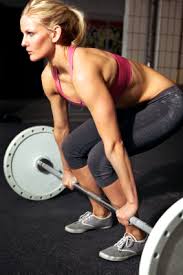
Serious strength-training enthusiasts know that lifting heavy for five repetitions or less, while extremely challenging, is the quickest way to increase muscle strength.
There is a distinctive difference between training for muscle size—technically called hypertrophy—and training for strength and increasing a muscle’s ability to generate force. While lifting heavy can improve the force output of a muscle without significantly increasing its size, training for size can increase muscle volume without necessarily improving strength.
Lifting with high repetitions can increase the sarcoplasmic hypertrophy of a muscle by increasing the amount of fluid in the sarcoplasm of muscle cells. However, using a heavy weight for fewer repetitions results in myofibrillar hypertrophy by increasing the thickness of individual muscle fibers.
Sarcoplasmic hypertrophy increases the size of a muscle, while myofibrillar hypertrophy results in thicker muscle fibers capable of generating higher levels of force.
If you are looking for a way to supercharge your clients’ workouts or help move past them past a plateau, consider using a weight heavy enough to limit them to five repetitions or less.* Here are seven benefits of how using heavy resistance can maximize the results from your fitness program.
Training for muscle strength is different than training for muscle size. A six- to 10-week strength-focused mesocycle of heavy resistance and low reps followed by a six- to 10-week hypertrophy (bodybuilder) mesocycle of moderate weight for higher rep ranges can produce significant gains in both size and strength.
Using heavy weights increases intramuscular coordination, the number of type II motor units and the amount of muscle fibers engaged within a specific muscle. Have you ever felt your muscles shaking while lifting heavy weights? This is because you are recruiting and activating the larger type II muscle fibers, which are only stimulated to work when a muscle is challenged with heavy resistance or working to fatigue.
Using maximal loads for compound (multi-joint) movements like the deadlift, squat-to-shoulder press, bent-over row or chest press can improve intermuscular coordination, which is the ability of many muscles to work together to generate and control high levels of force through multiple joints.
Lifting heavy weights elevates levels of anabolic hormones—specifically testosterone, growth hormone and insulin-like growth factor (IGF-1)—which are used to repair muscle fibers damaged during exercise. This helps the muscle fibers to become thicker and capable of generating higher levels of force.

Lifting heavy weights increases production of the hormone IGF-1. This hormone is related to the production of brain-derived neurotrophic factor (BDNF), which is a neurotransmitter responsible for stimulating the growth of new neural pathways in the brain along with enhancing communication between existing pathways. In short, lifting heavy could make you smarter by enhancing cognitive function.
Training with heavy weights helps you to improve your self-confidence. Knowing that you can lift heavy stuff gives you the confidence that you can handle common challenges, such as a putting a bag in the overhead bin on an airplane or carrying a heavy piece of furniture while reorganizing a room or helping a friend move.

Strength training with heavy weights improves muscle definition. Muscle definition occurs as the result of muscles remaining in a state of semi-contraction and heavy strength training recruits the larger type II muscle fibers responsible for a muscle’s appearance.
Source - C/O Ace


