This 30 minute workout uses tabata intervals to get a high intensity
cardio workout that works your full body. Both low impact and high
impact options available so appropriate for all fitness levels. Great
for calorie burning and losing fat, all while toning your whole body!

Showing posts with label muscle definition. Show all posts
Showing posts with label muscle definition. Show all posts
Monday, 21 September 2015

Thursday, 20 August 2015
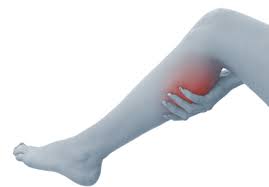
Muscle Cramps: Unmasking the Fitness Dilemma
The article talks about the occurrence of muscle cramps among individuals who want stay fit and improve their health. Rather than taking medication and drugs to treat muscle cramps, individuals are advised to make adjustments in their training routine and diets to lessen the development of muscle cramps.
 People nowadays are becoming more conscious about their health, recognizing the importance of exercise and physical activities in their lives. Many have been integrating exercises like jogging, skipping ropes, brisk walking, and other similar exercises in their daily routines. However, there are instances that people who exercise, especially those who run or jog, can be vulnerable to muscle cramps. Muscle cramps are the involuntary and forcible contraction of the muscles. These cramps can be related to a part of a muscle, the entire muscle, or a group of muscles. It may occur many times before it is relieved. Sometimes there can be simultaneous cramps that move body parts in opposite directions. Statistics show that about 95% of individuals experience muscle cramps at some point of their lives.
 Muscle cramps can be caused by different factors which may include poor flexibility, muscle fatigue, electrolyte and mineral depletion, excessive physical exertion, and dehydration. Electrolytes are minerals in the blood and other fluids that carry an energy charge. In addition to these causes, muscle cramps can be linked to some factors like improper breathing and unhealthy diets.
Muscle cramps may disappear on their own, but there are some things that can be done to lessen their severity and longevity. Below are some of the things that can be done to treat muscle cramps.
· Stop the activity that triggered the muscle cramp
· Gently stretch the affected muscle
· Keep the affected muscle moving with light activity (standing and walking around)
· Massage the affected area to aid blood flow
Making adjustments in one's training routine may help prevent the occurrence of muscle cramp. Improving one's cardiovascular fitness may also boost the flow of blood to the muscles. A strong heart may guarantee that there are sufficient amounts of oxygen and nutrients in the muscles for them to function properly. Stretching may also help the muscles become more loose and flexible that may stop the muscles from tightening and cramping. Stretching coupled with a good warm-up session may lead to increased range of movements and help prevent injuries and muscle cramps by prompting muscle recovery.
 In terms of breathing and healthy diets, people who workout should make sure that plenty of water is taken before and while working out to replace lost electrolytes. Deep breaths should be done while working out to allow consumption of plenty of oxygen. Studies show that when oxygen intake is more efficient the following may take place: slower heart rate, decreased blood pressure, eased anxiety, and relaxed muscles. Workouts should not be overdone to prevent the occurrence of muscle cramps. Any cramping usually subside after a few minutes of rest but if individuals are having trouble with their cramps they should seek the advise of doctors of other health specialists.
Rather than seek for the treatments or remedies for muscle cramps engaging in proper pre-workout and workout routines may eliminate or lessen the occurrence of these health ailment. The use of over-the-counter medication to treat muscle cramps is not prohibited. But individuals who wish to try them should consult doctors before taking them and not self-medicate. Proper workouts and healthy diets prioritized rather than taking muscle relaxants and other medications to treat muscle cramps.
Damian@FitnHealthy

Muscle cramps may disappear on their own, but there are some things that can be done to lessen their severity and longevity. Below are some of the things that can be done to treat muscle cramps.
· Stop the activity that triggered the muscle cramp
· Gently stretch the affected muscle
· Keep the affected muscle moving with light activity (standing and walking around)
· Massage the affected area to aid blood flow
Making adjustments in one's training routine may help prevent the occurrence of muscle cramp. Improving one's cardiovascular fitness may also boost the flow of blood to the muscles. A strong heart may guarantee that there are sufficient amounts of oxygen and nutrients in the muscles for them to function properly. Stretching may also help the muscles become more loose and flexible that may stop the muscles from tightening and cramping. Stretching coupled with a good warm-up session may lead to increased range of movements and help prevent injuries and muscle cramps by prompting muscle recovery.

Rather than seek for the treatments or remedies for muscle cramps engaging in proper pre-workout and workout routines may eliminate or lessen the occurrence of these health ailment. The use of over-the-counter medication to treat muscle cramps is not prohibited. But individuals who wish to try them should consult doctors before taking them and not self-medicate. Proper workouts and healthy diets prioritized rather than taking muscle relaxants and other medications to treat muscle cramps.
Damian@FitnHealthy
Monday, 10 August 2015
Fit n Healthy Challenge !!
With our 16 Week Challenge we are searching for 10 committed people , who want to transform their health and their physique.
This program is a 16 week program, broken down into 4 sections, which you can follow from home..--> Lose Fat
--> Build Lean Muscle
--> Clear Skin
--> Energy and Vitality
--> HEALTHY Clean Body
--> Re-set your Metabolism to Fat Burning Furnace
--> Understand how to Fuel your Body Long Term
--> Closed Facebook Forum for Support
--> Personal Mentoring and Support
If you would like to be considered, please like and head over to our FB Page and message us https://www.facebook.com/fitnhealthyu

Damian@FitnHealthy
Saturday, 1 August 2015
10 THINGS TO KNOW ABOUT MUSCLE FIBERS
Toning up, or improving muscle definition, is one of the most common goals of individuals starting an exercise program. The term tone comes from “tonus,” which is the technical term for a state of contraction of a muscle fiber. If all of the fibers within a muscle contract, it creates the shape commonly associated with a well-defined muscle.

The primary purpose of muscle fibers is to control physical forces moving through the body. Muscle-shortening actions can generate a force to move a resistance; for example, when moving from a seated to a standing position, the quadriceps and gluteus maximus shorten to help the body stand up against gravity. Muscle-lengthening actions can be applied to control and decelerate a force; for example, the quadriceps and glutes lengthen to control the motion of the body as it returns to a seated position. If you are interested in designing exercise programs that produce results, it is important to have a good understanding of how muscle fibers work and respond to exercise.
To more effectively help your clients achieve their fitness goals, keep in mind these important facts about muscle fibers and how they are affected by exercise:
Muscle fibers adapt to the specific type of exercise stimulus imposed during training. Mechanical stress refers to the physical stresses applied during resistance training, which cause microtrauma to muscle fibers. As fibers are damaged from exercise, they signal the biochemical reaction to produce new satellite cells responsible for repairing the mechanical structure of the muscle cell and for building new muscle proteins.
Muscle fibers are activated by a motor neuron, which is the connection between the central nervous system and the specific muscle required to perform a particular activity. A muscle motor unit is the motor neuron and the attached muscle fibers. Think of a motor unit as a light switch for the muscle—as a muscle is required to generate a force, the motor units will “light up” to stimulate the fibers to shorten in order to produce that force. There are a number of different muscle unit types, which are typically organized into three general categories: type I, type IIA and type IIB
According to the all-or-none theory, a motor unit is either active or inactive. When it is signaled to contract, it activates all of its attached muscle fibers. Slow-twitch motor units have a low threshold for activation and low conduction velocities, and are attached to type I muscle fibers. Fast-twitch motor units have a higher activation threshold, are attached to type II muscle fibers and are capable of conducting signals at higher velocities, resulting in greater amounts of muscle force.
Type I fibers are known as aerobic fibers. These fibers have a higher density of mitochondria, which are efficient at aerobic metabolism (the process of creating energy to fuel muscle activity with oxygen). The mitochondria give the cell a darker color, which is why these are known as red muscle fibers. Type I fibers use oxygen to create energy for lower-intensity, long-term, endurance-oriented activities like walking, running, swimming, cycling or standing for extended periods of time.
Type IIB fibers are known as anaerobic muscle fibers. Type IIB fibers store energy that is released for short, explosive, extremely high-intensity activities. Type IIB fibers do not have mitochondria and have a colorless appearance, which is why they are known as white fibers. Because they have a limited supply of stored energy, and thus fatigue quickly, Type IIB fibers are used for strength and power activities requiring a high amount of force in a short period of time.
Type IIA fibers have mitochondria, so they can be involved in aerobic activities; however, they can also be used to produce force rapidly during activities requiring a high amount of strength or power. Fast-twitch muscle fibers also have a greater diameter than type I fibers and play a more significant role in hypertrophy (the technical term for muscle growth). Recruiting and innervating type II muscle fibers requires creating enough mechanical overload to fatigue the involved muscle by the end of the set.
Muscle fibers work according to the size principle. As a muscle requires force, it will start by activating the smaller type I motor units. When these type I motor units can’t provide the necessary force (or fatigue), the larger type II motor units and muscle fibers are recruited to perform the work. A muscle has a finite number of motor units and the higher-threshold type II motor units are not “turned on” unless a high level of force is needed. The most common way to increase motor unit activation is to lift heavier weights, because an increased load placed on a muscle will cause a greater number of motor units to activate more fibers to generate the force necessary to overcome the resistance. This is why your muscles shake when you try to lift a heavy weight for the first time—muscle motor units not previously used are being “woken up” and called into action.
Muscle fibers experience two specific types of hypertrophy. Myofibrillar hypertrophy refers to the increase in size or thickness of individual actin and myosin protein filaments, which can improve the force-production capacity of individual fibers. Myofibrillar hypertrophy does not lead to larger muscles; rather, it results in thicker muscle fibers capable of generating more force. Sarcoplasmic hypertrophy is an increase in the volume of the semifluid interfibrillar substance surrounding an individual muscle fiber. This fluid contains the proteins used to promote tissue repair and growth. The muscle “pump” that bodybuilders work to achieve is actually sarcoplasmic hypertrophy—the cross-section of muscle fibers will increase, but most of the enhanced muscle size is due to an increased volume of the sarcoplasm and non-contractile proteins not directly involved with force production.
One of the long-term adaptations of muscle to resistance training is an increase in muscle fiber cross-width. As the cross-sectional area increases in size, the fibers have more surface tension and become capable of generating higher amounts of force. Muscles with a larger cross-sectional area of individual muscle fibers are capable of producing greater amounts of force. In addition to being responsible for producing the force necessary for dynamic movements, type II muscle fibers have a greater diameter (cross-width) than type I fibers and are responsible for the hypertrophy, or increased size, of a particular muscle.
Type IIA and IIB muscle fibers are responsible for generating movement as well as muscle size and definition. Both classifications of type II muscle fibers create higher levels of force to produce human movement and are known as phasic muscles. Type I fibers are responsible for maintaining postural and joint stability, and can be categorized as tonic muscles.
Source Pete McPete McCall | ACE
Subscribe to:
Posts (Atom)