Showing posts with label fasted workouts. Show all posts

Friday, 19 February 2016

Fitness Programs for Women: Four Essential Tips

Fitness programs for women are often wrought with bad advice and pseudoscience. It's no wonder that so many fitness programs for women utterly fail! There's plenty of great information out there, but it can be impossible to find amidst the gimmicks, fad diets, and ineffective workout routines. If you're looking for fitness programs for women that really work, try using the four following tips.

1. Lift Heavy Weights
Plenty of women make their way into the weight room now and again, but most are afraid that they'll get "bulky" if they lift too heavy. That's nonsense! It takes male bodybuilders years of dedicated effort to pack on muscle mass, and they've got testosterone and tons of food on their side. Not only will you not get "too big" by lifting challenging weights - you'll actually look better.
Lifts like squats, bench presses, deadlifts, and other heavy movements are great for stimulating your metabolism and packing on a little bit of lean mass. Whether or not you realize it, that's really what you want! The right amount of muscle gives you a lean, fit look that you simply can't achieve with cardio alone. Challenging yourself in the gym will also cause you to burn more calories, which means you get to eat more and still lose weight.
2. Low Fat is NOT Healthy!
Some nutritionists are still stuck in the 1980s' low-fat craze, but avoiding dietary fat is NOT going to get you the results you want. In fact, most "low-fat" products like crackers, pretzels, and other grain-based products will make it nearly impossible to get lean! They make your blood sugar levels skyrocket, which in turn causes your body to secrete tons of insulin - a hormone which actually makes your body store even more fat. If you're trying to get lean, ditch most of your carbs and eat plenty of olive oil, avocados, nuts, and even some red meat.
3. Ease Up on the Cardio
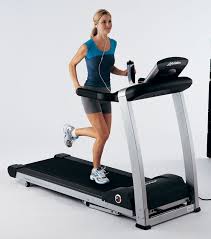
If you're going to start lifting heavy weights (which you should!), then you're also going to need to ease up on all of that cardio you're probably doing. Slaving away on a treadmill or elliptical is simply not necessary, and it eats up way too much of your time. It's great to do a few short sessions per week for your cardiovascular health, but hours upon hours of monotonous movement aren't going to help you lose fat.
However, there is a much better type of cardio for optimal fat loss: interval training! On a track, treadmill, elliptical, or exercise bike, simply alternate short bursts of all-out sprinting with longer bouts of active rest. For example, you might do eight rounds of fifteen-second sprints and forty-five second "jogs" on an elliptical machine. The whole thing will be over in under ten minutes, but the intensity of the workout will cause your body to burn more fat all day long.
4. Don't Under-eat
One of the worst things you can do in fitness programs for women is to eat too little. Your body is an adaptive machine, and it will respond to severe calorie restriction by slowing its metabolism way down. Have you ever noticed how lethargic, tired, and cold you get when you don't eat enough? Those are sure signs that your body is burning less fuel!
That's not to say that you shouldn't cut calories at all - your body does need a reason to use its fat stores for energy instead of your food. The key is to eat just little enough that you can burn fat while avoiding hunger. Focus first on the right food choices, and then start counting calories if you truly need to. Overall, it's best to take it slow and steady with your fitness programs for women and focus on losing no more than a pound per week.

Saturday, 24 October 2015

Does Fasted Cardio Provide Significant Benefits?

One recent trend that has received a significant amount of attention, both in the online blogosphere and in traditional fitness media, is the idea of performing exercise first thing in the morning on an empty stomach. The practice of exercising in a “fasted state” has been promoted as a way to burn more calories from fat than from carbohydrates, making it an effective way to boost the fat-burning effects of exercise. 

There are a couple of theories on why doing cardio in a fasted state first thing in the morning may be more effective for fat burning. For example, cortisol is a hormone that helps promote the metabolism of fat for energy. One theory suggests that, because cortisol levels are higher in the morning, exercising on an empty stomach will lead to greater amounts of fat burning. A second theory posits that, because the body’s resting metabolism continues to work overnight while the body sleeps, lower levels of carbohydrates will be available for fuel before breakfast. As a result, the body will have to rely on fats as the primary energy source for any physical activity. 

Research exists to support both theories. For example, studies have shown that fasted exercise can help endurance athletes burn higher levels of fat than carbohydrates. However, while there may be some benefit to exercising on an empty stomach, here are three specific reasons why fasted exercise may not a good choice over the long-term. 
  1. Exercise in a fasted state could burn more calories from fat, but it also could cause the body to burn protein for fuel, which would reduce the amount that can be used to help repair and build muscle tissue. Gluconeogenesis is the process of converting proteins to glucose for energy. In short, if carbohydrates (glycogen in muscle and liver, glucose in the blood stream) are not immediately available for energy, the body can convert proteins for fuel, which leaves fewer proteins available to rebuild muscle post-exercise.
  2.  
  3. The body has plenty of free fatty acids (FFAs) available for exercise. The FFAs that are not immediately converted to energy to fuel muscle activity can be redeposited in adipose tissue in the abdominal region. In other words, they will end up as belly fat. Exercising when cortisol levels are higher could lead to more FFAs circulating in the blood than can be used. So, rather than depleting levels of fat, exercise first thing in the morning could actually shift body fat to the abdominal region.
  4.  
  5. If the goal is weight loss by metabolizing as much fat as possible, it is more important to consider energy expenditure over a 24-hour period and not just at one point during the day. Monitoring energy intake and expenditure throughout the day and identifying how to reduce excessive intake and increase opportunities to move can play a more significant role in long-term weight loss than trying to burn more fat by exercising first thing in the morning. 
While it doesn’t offer a viable long-term solution, exercising in a fasted state could be a SHORT-TERM technique for helping a client achieve a specific body-composition goal. Here are three things to consider about using fasted exercise: 
  1. For years, bodybuilders and figure competitors have utilized fasted exercise to help reduce body fat prior to a competition. This is because low-intensity, steady-state (LISS) exercise below the first ventilatory threshold will rely on FFAs as the primary fuel source. To be most effective for fat burning, exercise in a fasted state should focus on LISS, where the intensity is low enough to allow the client to talk comfortably during exercise. Exercise at higher intensities will metabolize more carbohydrates and require more oxygen; therefore, the rate of breathing will increase to bring in more oxygen and exhale more carbon dioxide, which will make talking difficult.
  2.  
  3. The body is an extremely adaptable organism. If the same exercise is performed at the same intensity for an extended period of time, the body will become very efficient at producing energy to fuel the activity. Doing fasted exercise first thing in the morning could help a client move past a sticking point, but after a period of time the body will adjust to this condition. That’s the signal that it’s time to change the workout.
  4.  
  5. A client may like to exercise first thing in the morning and simply prefer doing so on an empty stomach. If this is the case, help them maximize energy metabolism by recommending LISS over higher-intensity exercise protocols. If a client wants to participate in high-intensity exercise first thing in the morning, it is important that he or she know how to properly fuel after the workout. 
It’s important to note that eating a meal or snack too soon before exercise can raise the levels of insulin, which helps metabolize and store fat. If insulin is elevated prior to exercise, the result could be fewer FFAs available for energy. A low-glycemic snack more than 30 minutes prior to exercise can provide energy for a workout and reduce the risk of elevating insulin levels. 

Finally, keep in mind that substrate utilization for producing the energy required to fuel workouts is regulated by a number of variables, including hormone levels, available nutrition substrates, enzyme activity and the intensity, duration and type of physical activity. Exercise in a fasted state could provide some short-term benefits, but the downside is that it could also limit the amount of protein available for muscle building. It’s more important to help clients identify ways to be more active throughout the day and guide them toward healthier nutrition choices than it is to recommend working out at a specific time of day. 

Source ACE :  Pete McCall Health and Fitness Expert

Monday, 7 September 2015

5 Components of Physical Fitness

While the definition of physical fitness can be a little complex or unclear and the definition of physical fitness can vary, most government health agencies and exercise scientists agree that there are 5 components of physical fitness related to health. 

These components provide a fairly accurate representation of how fit and healthy the body is as a whole (total or overall fitness). 

The 5 components are cardiovascular fitness (also referred to as cardio-respiratory endurance or cardiovascular endurance), muscular strength, muscular endurance, flexibility, and body composition.
Let's take a closer look at these components individually.
 
 1.) Cardiovascular fitness (or cardio-respiratory endurance or cardiovascular endurance)
Of the 5 components, cardiovascular fitness is the cornerstone that creates the pathway to improving your other fitness levels.
Cardiovascular fitness is the efficiency with which the body (the heart and lungs) delivers oxygen and nutrients to the required working muscles and transports waste products from the cells over a sustained period of time. Or to put it another way, it's the ability of your heart and lungs to work together to provide the necessary oxygen and fuel to your body without quickly reaching a high level of fatigue and tiredness.
In our daily lives, we need cardiovascular fitness to handle the physical tasks and all of the "running around" we do.
A common test of cardiovascular fitness usually involves some type of sustained running. But typical examples of physical activities that relate to cardiovascular fitness are jogging, swimming, cycling, brisk or speed walking and any type of aerobic exercises. Aerobic exercise is the best way to improve cardiovascular fitness.

2.) Muscular strength
Muscular strength is the maximum amount of force (weight or heavy resistance) a muscle or muscle group can generate in a single effort to the point that no more repetitions can be done without rest. Muscular strength is quite the opposite of cardiovascular fitness in regards to the fact that cardiovascular fitness is measured over a certain period of time. While on the other hand, muscular strength is measured in one repetition.
In our daily lives, we need modest levels of strength to be able to perform everyday physical tasks like lifting, moving, carrying, etc.
A common test to measure upper body strength is some type of weightlifting exercise, such as the bench press. Anaerobic weightlifting exercises like the bench press, leg press, shoulder press, or bicep curls are examples of the best ways to improve muscular strength.
 
 
3.) Muscular endurance
Muscular endurance is the ability of a muscle or group of muscles to perform repeated movements (or to hold a particular position) with less than maximum force for an extended period of time or until muscular fatigue. Or, to put it simplistically, it's how long your muscles can do something before getting too exhausted to finish.
Be careful not to confuse muscular endurance with muscular strength. While they can work together, they are definitely not the same. For many athletes, there may be a need to distinguish between muscular strength and muscular endurance. But for everyday people who want to easily perform their daily routines, are trying to stay healthy and fit, and just want to enjoy physical activities like hiking, biking, or just playing in the park with their children, muscular endurance plays a major role in fitness.
Common testing for muscular endurance can be dynamic (the ability to repeat contractions) or static (the ability to sustain a contraction). Dynamic tests would be to see how many push-ups or sit-ups, for example, a person can complete in a designated amount of time (e.g. 30 seconds, a minute, or maybe longer). Or, without being timed, the person could do as many repetitions of the exercise as they could until they couldn't do anymore. An example of a static test would be the flexed-arm hang whereby the performer hangs on a bar until the designated stopping time or until they become too weak to continue hanging.
Muscular endurance can be improved by both aerobic and anaerobic exercises. Some examples would be biking, step machines and elliptical machines.

4.) Flexibility
Flexibility is the ability to move the joints or any group of joints, muscles, ligaments, and tendons through their full, normal range of motion without hindrance, discomfort, or pain.
Flexibility is actually more important to physical fitness than people realize. Not only does flexibility play a big role in performing many daily tasks, but maintaining or even increasing your flexibility is critical to protecting your joints and keeping them healthy. In addition, being flexible contributes to improving your lower back health, reducing the appearance and effects of arthritis, and reducing muscle-tendon injuries.
Not everyone has the same flexibility or flexibility requirements. Your flexibility tells you how limber you are. And, when it comes to testing your flexibility fitness level, the sit-and-reach test is most often used.
Stretching is the best way to improve flexibility. And, most fitness experts recommend a daily routine of static stretches for each joint.

5.) Body composition
Body composition is the percentage of fat in your body compared to your lean body mass (muscles, bones, tendons, ligaments, organs, etc.).

Body composition is a better indicator of your overall fitness condition than body weight. So understand that your total body weight or what you see on your bathroom scale does not tell you how much fat or lean body mass (muscle) you have.
Body composition is useful in helping to determine health risks. Therefore, knowing your body composition and how it relates to your overall fitness level is essential. An optimal ratio of fat mass to lean mass is a clear indicator of good fitness.
 
Your body composition is a consequence of the extent that you perform the other components of physical fitness. In other words, when you improve the other four components, it will have a positive impact on body composition resulting in less body fat. Alternatively, when you have a high body fat content ratio, you are considered overweight or possibly obese. And, it negatively affects the other fitness components as well as your daily performance, your appearance, and your overall health.
There are several methods that can be used to calculate body composition. The best method is underwater weighing. But due to the expense, this isn't practical for the everyday person. Incidentally, if you can go to a university or some other place that is set up to do it, it would be well worth your time to check it out. Therefore, the most common method of determining your body composition is skinfold readings - using skinfold calipers and taking measurements from certain areas of your body.
A regular program involving aerobic exercise and strength training can help you decrease your body fat and increase your muscle mass; and thereby, significantly improving your body composition and general overall health and fitness.

In conclusion, you now know that being fit is not just about being able to bench press a lot of weight, but you also need to know how well you can handle running a mile, for example, and a few other things. The key is that by understanding the 5 components of physical fitness, you'll be better able to assess your fitness level and determine what specific health and fitness goals you'd like to achieve.

Source:Donald Holland Ezine

Wednesday, 19 August 2015

6 Steps to Ending Bad Eating Habits

Whether quitting your addiction to snacking, too much sugar, or quitting smoking it  starts with knowing what you want, checking obstacles then handling them in advance. Follow these six steps and you'll more easily reach your goals.

A client wrote, "Help me! I thought I was finally getting a handle on my weight issue but the sugar is killing me. I had an awful day. I won't even tell you what I ate today because it is just so unbelievable. All I will say is that 90% of my food today consisted of sugar! I really, really need some help getting past these cravings. I am no doubt a sugar addict. If I could get past this there is no doubt that I will reach my goal."
 
 If you see a little of yourself in this message, you're not alone. Many describe themselves as sugar addicts. They believe if it were only for that one thing, then they could reach their weight loss goals. If you believe only one thing stands in your way of losing weight, consider this: What if that one thing (an  addiction to sugar for instance) were gone? Do you really believe, "If I could get past this, there is no doubt that I will reach my goal," or is it an easy excuse to stay stuck?

If I told you I could show you a way to stop craving sugar, would you want me to show you how?

Think about that for a moment. Close your eyes and really think it through. You've said if only you didn't crave sugar, then you could lose weight, but is that really true for you? Ask yourself these questions:

Would you eat differently, and if so how?

Would you act differently, and if so how?

What else would change, and what would stay the same?

What would you lose?

What would you gain?

Until you know what you want, know you can achieve it, and know what else will change (i.e. how your life may be different), you can't discover any obstacles that first must be considered. For instance, you may want to stop eating anything after 7 PM yet your husband doesn't come home from work until 8 and he wants you to join him for dinner. That's an obstacle.

If you've got a habit of watching your favorite TV show with a bowl of ice cream, then breaking that habit is another obstacle.


If you don't work out ways to overcome your obstacles perhaps through discussion and compromise with your husband, or habit breaking exercises for your ice cream habit, there's bound to be a problem. Just saying you're not going to do something any mroe rarely works. Instead determine what might stand in the way of achieving your goals, find a way around them, and you're much more likely to actually achieve those goals once and for all. 

The statement, "if this one thing were handled, then everything else would fall into place" is an "If Then" statement and gets people into trouble. They want a fairy godmother to make it all better. A strong belief that one single thing such as, "eating sugar is my problem," sets you up to fail, especially if you really like eating sugary foods.
 
Getting a handle on your cravings is not an all-or-nothing proposition. You must leave room for occasional deviations. It's not the occasional side trip that causes weight trouble, it's the road we usually travel.

In NLP (Neuro Linguistic Programming) a good starting point is the exercise called Establishing a Well Formed Outcome. "Well formed" means it meets all criteria of a well thought-out end result.

NLP: How to Create a Well Formed Outcome & Get What You Want

Here are the steps to creating a well formed outcome:

1) State what you want (not what you do not want). "I want to weigh 135 pounds."

2) Determine whether you can achieve it (do you believe it is possible?).

3) What resources do you have and what do you need (time, money, gear, clothes, equipment, coaching, whatever).

4) Check whether anyone else is involved and any potential obstacles that may come up regarding others. Think of everyone involved in your day-to-day life.

5) Picture yourself "as if" you've obtained what you say you want and see if that picture fits. Do you like what you see?

6) Put together a plan of action for the achievement of your outcome.

While it may seem like a lot of effort simply to decide what you really want, going through these steps at the beginning helps you find potential obstacles which previously stopped you from moving forward. For example, if you decide you want to join a gym and start exercising every day but you've forgotten you don't even own a car and just lost your job, that exercise plan might not work out right now. If you did join a gym, you'd end up not going and then you'd think you'd failed, yet it was the plan that failed, not you. You didn't think it through.

A better plan in this instance may be doing exercises at home, or within walking distance (or simply walking for exercise). Later, when you do have transportation, you can rethink the plan and perhaps join a gym then. There are always options.

It's better to look at what you want from every angle, then put together a plan you know can and will work. Then when you know what you want, you'll also know you can make it happen and begin by taking that first step toward making it a reality.

Damian@FitnHealthy check out our FB Page

Monday, 27 July 2015

The Benefits Of Early Morning Running Exercise

If the thought of exercising in the crack of dawn only makes you wish to hit that snooze button much more, reconsider. Exercise sets the interest rate of your day. Starting off your entire day with a bang might give you a healthier mindset which means you make healthier food choices during the day. Learn about the perks of exercising at the start of the morning. It might prevent you from making excuses and keep you motivated to get out of bed, put on your sneakers and build up a sweat.

 It's a Consistent Workout

A large barrier to getting enough being active is often the fact that its hard to fit it right into a daily schedule. Its extra hard for those who have kids, work unpredictable hours, and have a somewhat spontaneous social life. Should you commit to working out in the morning, however, you̢۪re way not as likely to have the excuse of things just appearing. Plus, you wont be exhausted from the rough day at the office. Actually, people who work out in the morning have been shown stick to their exercise plans much better than people who plan to exercise in the evening.

Habit Forming

Everyone has a morning routine. You might push the snooze button around the alarm clock three times before finally getting out of bed, or jump out of bed and head toward the coffee pot. Many people may shower before breakfast or their habit would be to shower after they eat. Your routines end up part of your nature. Exercise may become part of your morning routine and something of the most healthy habits you are able to develop. Those who exercise midday or in the evening may find that occasionally they're dissuaded from exercising due to unforeseen events. Working late or high-traffic after work might make you late for the session at the gym, so you choose to skip exercising. Exercising each morning eliminates the excuses because of not exercising. Set your alarm for Half an hour earlier than you normally wake and walk for 25 minutes before breakfast every day. If walking isn't feasible, do some stretching and body-weight exercises inside your bedroom before you have breakfast. Make morning exercise a part of your daily routine, and soon morning exercise turns into a healthy habit.
Enjoy Better Sleep

For those who have trouble falling asleep at night, early morning running exercise may help. According to a study conducted by researchers at Appalachian State University, exercising at the start of the morning improves the quality of the sleep cycle and enables you to sleep longer at night. Avoid squeezing inside a workout close to bedtime as this raises your body temperature and heartbeat, which might trigger insomnia. Understanding that you have an exercise session scheduled for at the start of the morning might keep you motivated to go to bed early which means you feel energized for your morning workout.

Better Fat burning capacity

A study by Belgian researchers published within the journal of Physiology found that male test subjects who ate an eating plan high in fat and carbohydrates, and involved in strenuous exercise for 60 to 1 hour 30 minutes before eating breakfast, gained hardly any weight despite eating a calorie-rich diet. Morning exercise might not be for everyone, but the benefits may outweigh the hassle of getting up earlier for exercise. The body continues to burn fat and calories after arms exercise. Exercising in the morning when your body -- inside a fasting state -- burns fat more proficiently may improve your weight-loss efforts. While you lose fat and gain muscle mass, the body becomes even more efficient at losing fat.

More Energy

Exercise releases feel-good compounds like endorphins that enhance your mood and energy levels, an impact that can last well in to the afternoon if you get your workout at the beginning of. Plus, exercising in the morning will help you sleep better than if you exercise later in the evening, since you̢۪re not receiving that extra energy boost as you̢۪re attempting to settle in for the night.

Better Mood

Individuals who exercise in the mornings enjoy increased levels of energy throughout the day and improved mood. Exercise energizes the brain to produce endorphins. Endorphins are usually called feel-good hormones. They produce a feeling of well-being and sometimes cause the exerciser to feel a gentle euphoria, such as the a runner's high. Individuals who engage in 30 minutes or more of moderate exercise within the mornings can benefit from natural endorphins.

Damian@FitnHealthy

Thursday, 9 July 2015

Cardio Training Habits for Success

If you're new to the world of fitness, first and foremost never over do it, and always get cleared by a medical doctor if you think you may have health considerations


Cardio short for cardiovascular training by design is different from resistance training. The main focal point of cardio training is to increase the fat burning process. This is accomplished by burning fat as the main fuel source. Weight resistance training builds bigger muscles and uses glucose (usable carbohydrates) as the main fuel source. Although if cardio training is intense (not able to talk and exercise simultaneously) glucose instead of fat will be used as the energy substrate. This is due to the fact that fat doesn't burn fast enough to keep up with rapid movements.

Like I mentioned before if you're a newbie to exercise take it slow by walking in your neighbor 3 days a week for 20 min, for the first 2 weeks and progress up to 4-5 days a week for 45-60 min, at the end of the 3rd and 4th week. After that, you can try more intense versions of cardio including: treadmills, ellipticals, stationary bikes, jogging and cross trainers. 

 
Choose a level where talking with your exercise partner is still possible for 15 minutes, 3x week for 2 weeks. You can progress up to 45-60 min 3x week. A rudimentary way of determining intensity level for these cardio modalities is 55% to 65% of your maximum heart rate. You can estimate your maximum heart rate by subtracting your age from 220, then multiple that by either.55 or.65. 
This is a good range that will keep you in the fat burning mode and not burning glucose that you will need for your resistance training(glucose is the preferred fuel source during weight training).

Although the age predicted max heart rate is the most common method under use today it has one major flaw. Some 60 yr olds are in better shape that some 30 yr olds, but this method would fail to recognize such an important factor. I actually prefer using something called the Borg Scale to determine intensity which I outline a little later in this article. 

Advantages of cardio training: When your muscles need oxygen and nutrients it's your heart-lung complex (cardiovascular) that does the job. When your body has waste products that need to be expelled like carbon dioxide and metabolic wastes, your cardio system better be in tip top shape, or illness and disease might soon follow. The better shape you're in the more proficient your heart will be to pump blood to all the various organs. This translates into more energy for you throughout the day and a more rewarding and productive life. 


An out of shape person has his or her heart working overtime just to accomplish the minimal about of work required to maintain life. Now take that person and try to make them do something active beyond sitting on the couch. The heart will have a stressful time keeping up because it's all ready working hard. Shortness of breath, rapid heart beat, wheezing, loss of balance and fatigue are signs of a weak cardio system. 

The more cardio trained you are, the less your heart has to work. Who do you think has more energy a person with a resting heart rate of 80(how many times the heart beats in one minute) or a person with resting heart rate of 110 beats per minute? The person with the resting heart rate of 80 is more proficient in pumping blood throughout the body compared to the person who needs an extra 30 beats per minute to get the same amount of blood pumped throughout the body. 

A good method of determining of how hard you're working is something called the Borg Scale and my own preference of intensity feedback:

6, 7, 8 = very, very light
9, 10 = very light
11, 12 = fairly light
13, 14 = somewhat hard (correlates 55-65% age predicted max HR)
15, 16 = hard
17, 18 = very hard
19, 20 = very, very hard

You're your own master here, which is why I like using this scale. Begin with light sessions according to how you perceive your own exertion and work your way up until you can maintain 2 somewhat hard workouts for about 45-60 min, 2 x week along with another 2 light workout sessions alternating between the 2 for a total of 4 sessions a week. 

 
 Again, cardio training along with resistance training is essential to good health. It is also the cheapest and easiest way to exercise, just grab some running shoes and you're all set!

Damian@FitnHealthy

Tuesday, 7 July 2015

Water And Exercise

The human body is made up of over 75% of water, and as we all know, we cannot live without water.  The fact is, we can only survive for a total of 3 days without water. Water has however, been replaced in most diets by soft drinks and other sugar sweetened refreshments. 
 
 Keep in mind that water is a healthier and necessary for leading yourself towards a better health and longevity.

Your own personal need for water can vary greatly due to exercise, weight, and temperature.  Research has proven that over 2/3 of adults don't get the water they need on a daily basis.  By drinking water on a regular basis you can replenish your body and keep it well hydrated and functioning as it should be.

A majority of us wait until we are thirsty before we drink water.  Keep in mind, this way isn't a
reliable gauge of the water needs for the body.  By the time you are thirsty you have already lost two
of more cups of the body's water supply.  Therefore, drinking water regularly is much better than simply waiting until you are thirsty.

It is very important that you don't substitute beverages with alcohol and caffeine for water.  The
reason behind this is that those types of beverages act as a diuretic and can cause you to lose more
weight through increased urination.  You may think and feel as if you are getting more water through
these beverages, although the fact is that you are letting it go almost as fast as you consume it.

Anytime you exercise, you need more water. Due to perspiration, your body will lose quite a bit of
water.  For each pound lost due to exercise, you need to drink 2 cups of water.  Even when you lay down to sleep, your body loses water.  By drinking a glass or more of water before you go to sleep, you can wake up with your body functioning as it should be.
 
 
It should become more obvious that when you are sick you'll need more water than any other tine.  When you get a cold or the flu, your body can become dehydrated quite quickly.  You can help to prevent this by drinking more water at times when you become sick.

There are several mixed opinions as to whether purified water will actually provide benefit.  This
is a subject you should explore yourself as you determine the best type of water for yourself. 

Always make it a habit to drink water on a daily basis.  You should keep a bottle of water with you
at all times and drink it throughout the day.  You should also teach yourself to drink water instead
of other beverages that don't replenish the nutrients your body needs.

Damian@FitnHealthy

Saturday, 2 May 2015

Don't Live At The Gym!

It's not a good idea to stay too long in the gym says a consortium of renowned workout experts. 

In fact, you're less likely to return to the gym if you stay for more than one hour.
Additionally, you can get burned out if you're not pumped on carbs throughout the day, something that most bodybuilders avoid in the first place. Routine is more important than maxing out to the point of passing out.

Deleterious side effects can occur with a maximum workout schedule. However, it is important to differentiate between excess workout and just getting everything going at full speed. In women, spending too much time at the gym or exercising to the point of exhaustion increases the chances of infertility three times over. It is no wonder that successful female athletes have considerable trouble starting a family. Spending more than 45 minutes to an hour at the gym in strenuous exercise can signal the body to produce excess cortisone which can tell the body to store fat. 
 
 Furthermore, doing cardio exercise for more than 30 minutes has no use because the maximum effect of a cardio workout is achieved in the first 30 minute timespan. Interestingly, people see the need to use a more intuitive approach and exercise more than 30 minutes, but the scientific approach would have them stop at 30 minutes. The general issue of attraction can also come up because most women that men like don't even have a gym membership. Trying to get rid of every single pound can make a woman look artificial and unwomanly.

Women tend to like men that are toned but not overly built. It is your choice how you want to appear to others, and you can sculpt your body however you choose, but it is wiser to go for more a natural look and that means spending a moderate amount of time in the gym.

Also, if you're doing a well-planned workout schedule, then you shouldn't need to spend an excess of time in the gym. No one should work out for more than 1 hour, and 45 minutes is preferable. Try to get a concise schedule going ahead of time so that you don't waste time trying to figure out what to do when you're in the gym.

Finally, the Body for Life program, the bestselling book of proven results for flabby folks suggests strenuous bursts of 20 to 30 minutes and intense weight training for fast-track results. If your goal is to change your physique fast, then it just doesn't make sense to spend an excess amount of time in the gym. You are either going to slow and need to speed it up or you exercising too much for your body to handle.

You should never exercise past the wall of pain and should stop as soon as your body's natural supply of endorphins are released. Exercising past the endorphin release can deplete your body of electrolytes, glycogen, and protein to rebuild your body in the long term.


Source Luka Bozic/ Workout Plans

Saturday, 25 April 2015

It’s long been a question among exercise professionals – should you exercise before breakfast ?

It’s long been a question among exercise professionals – should you exercise before breakfast, or is it better to get some calories in before you work out? Recent research suggests that exercise before breakfast can have some benefits – especially for men.


Researchers in New Zealand, led by Associate Professor Dr Steve Stannard, worked with two groups of novices for a month. The subjects pedalled up to 75 minutes a day, with some of them eating a high-carbohydrate breakfast first, while others training with their stomachs empty. Researchers then conducted blood tests to assess the effects of the training and the eating protocols on their fitness and weight loss. 

 So was exercise before breakfast beneficial? What the researchers found was that those subjects who trained without having breakfast first had a greater ability to store glycogen – an advantage for athletes. They also had a greater ability to burn fat. Researchers concluded that because the subjects who trained without eating breakfast were stressing their bodies a bit more during training, they showed a faster rate of adaptation, and consequently improved performance levels.

Interesting as this research is, it does need to be put into the context of other findings. For while it appears that training in a glycogen-depleted state can have benefits for endurance athletes, it does not help athletes who are strength training.

To maximize the benefits of strength training it is essential that your body has sufficient fuel to work out effectively – working out without sufficient calories in your body will comprise your workout, and will therefore actually reduce its effectiveness.

Similarly, for competitive endurance athletes who need to train hard, the positive adaptations that can occur from working out on an empty stomach are likely to be offset by the diminished performance during the training session. Therefore it is recommended that athletes in training use this method judiciously, perhaps once a week.

Finally, as Dr Stannard noted, these findings only apply to men – women should eat breakfast before a workout, as they tend to get more from exercise if they take a moderate amount of carbohydrates before they start working out.

The bottom line? For men whose main aim is to lose weight, performing their cardio workouts on an empty stomach can have positive adaptations and increase weight loss. However, for all others, this technique should be used with caution.

Source Netfit